Amado, off I-19

Amado Commercial Roof Coating

Amado commercial roof coating for stand-alone roadside buildings, with checks after monsoon storms for hail dents, bird pecks, and bare foam.

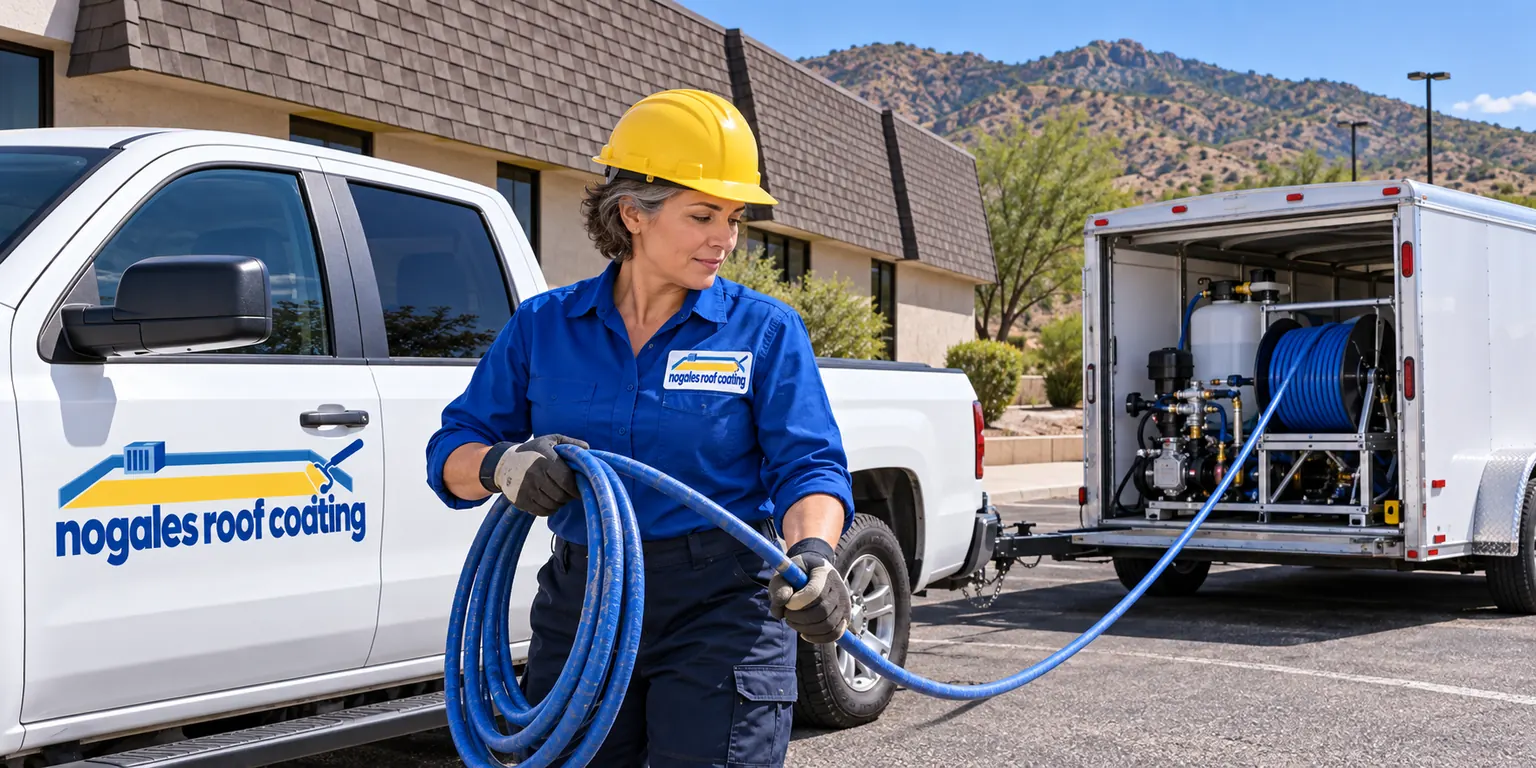
Roofer uncoiling spray hose from a coating rig trailer beside a commercial office building

After The Storm Passes Through

Amado's commercial buildings sit off I-19 at the north end of the area, often alone on open ground.

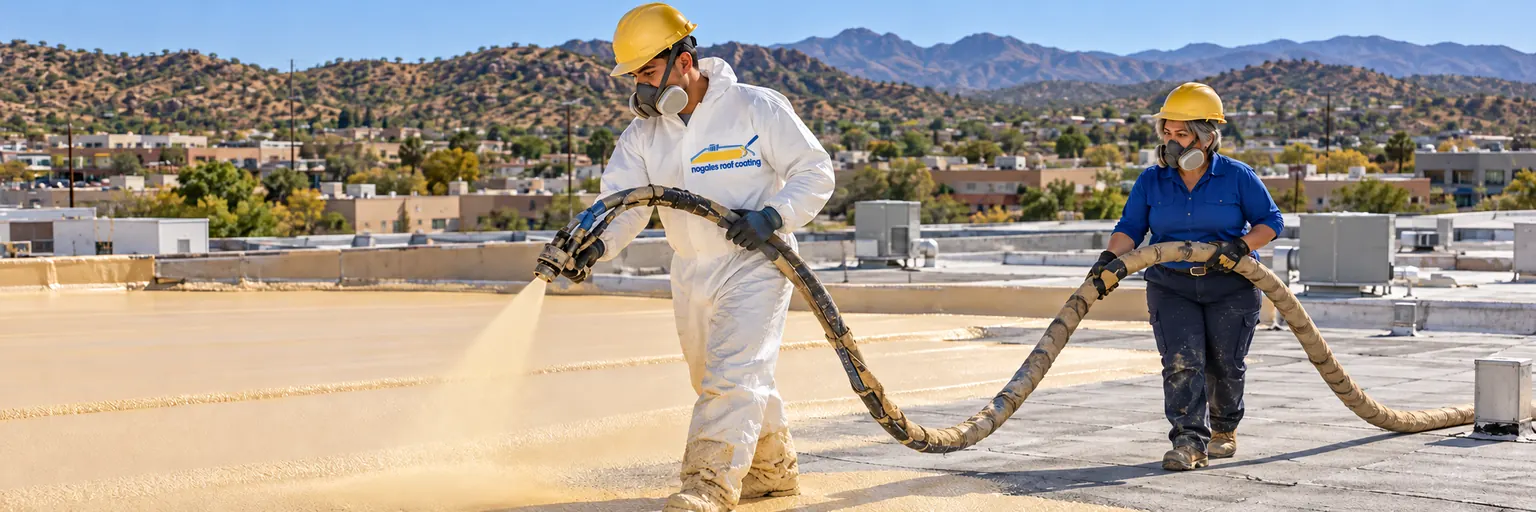
Roofer in a protective coverall spraying polyurethane foam on a flat roof while a coworker tends the hose

With nothing around them, these roofs take the full force of summer storms: heavy rain, gusts, and now and then hail. Many are spray foam or coated low-slope roofs.

A short check after a big storm finds the small openings, like dents, pecks, and torn edges, while they are still a quick repair instead of soaked foam or wet insulation.

  • Roof walked after major storms or hail
  • Dents and pecks marked, filled, and coated
  • Bare foam recoated before sunlight breaks it down
  • Santa Cruz County permits, or Pima County for north-end parcels

Storm Damage To Look For

Most storm damage on a foam or coated roof is small and easy to miss. The numbers match the list.

12345
  1. Hail Dents

    Hailstones crush the topcoat and leave shallow dents. Where the coating cracked, water and sunlight can now reach the foam underneath. Those cracked dents get filled and spot-coated the same season.

  2. Lifted Edges

    Gusts get under edge metal and the coating along the roof perimeter. Lifted or torn edges are refastened and sealed before the next storm. Fasteners along the edge are checked too.

  3. Units After Wind

    Rooftop units shift slightly in high wind and pull at the coating around their curbs. Cracks at curb corners get fabric and fresh coating. Unit panels are checked for loose screws as well.

  4. Bird Pecks

    Birds peck at foam roofs, leaving small holes through the topcoat. Each one is filled and coated so water cannot soak into the foam. Thin topcoat areas get an extra coat.

  5. Debris At Drains

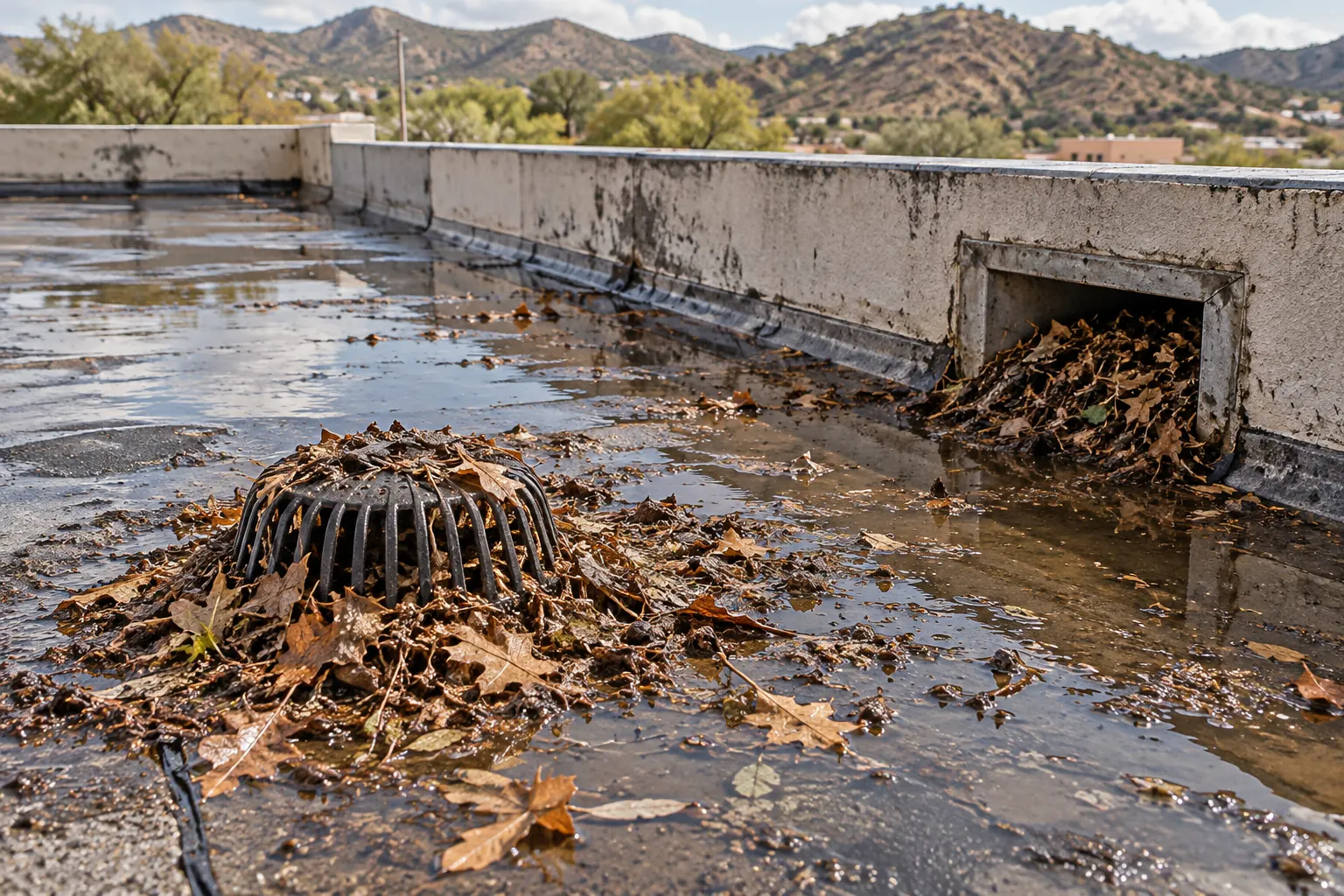
    Storm wind blows dust, leaves, and roadside trash onto the roof. Drains and scuppers get cleared so the next storm drains away. Strainers missing after a storm are replaced so trash cannot enter the drain line.

Benefits of Coating Your Roof

Keeping a coated or foam roof sealed after storms can bring these gains.

  • Small Repairs Stay Small

    A dent filled and coated the same season costs little next to cutting out foam that soaked up water through it.

  • Foam Stays Dry

    A continuous topcoat keeps rain out of the foam cells, so the insulation keeps doing its job through every monsoon.

  • Blocks Sun Damage

    Fresh coating over exposed spots stops the sunlight that turns bare foam brown and powdery.

  • Recoat Over Tear-Off

    A roof kept sealed can be recoated when the topcoat wears thin, instead of being torn off and replaced.

Commercial Roof Coating Options for Amado

Three systems cover most stand-alone roofs in Amado.

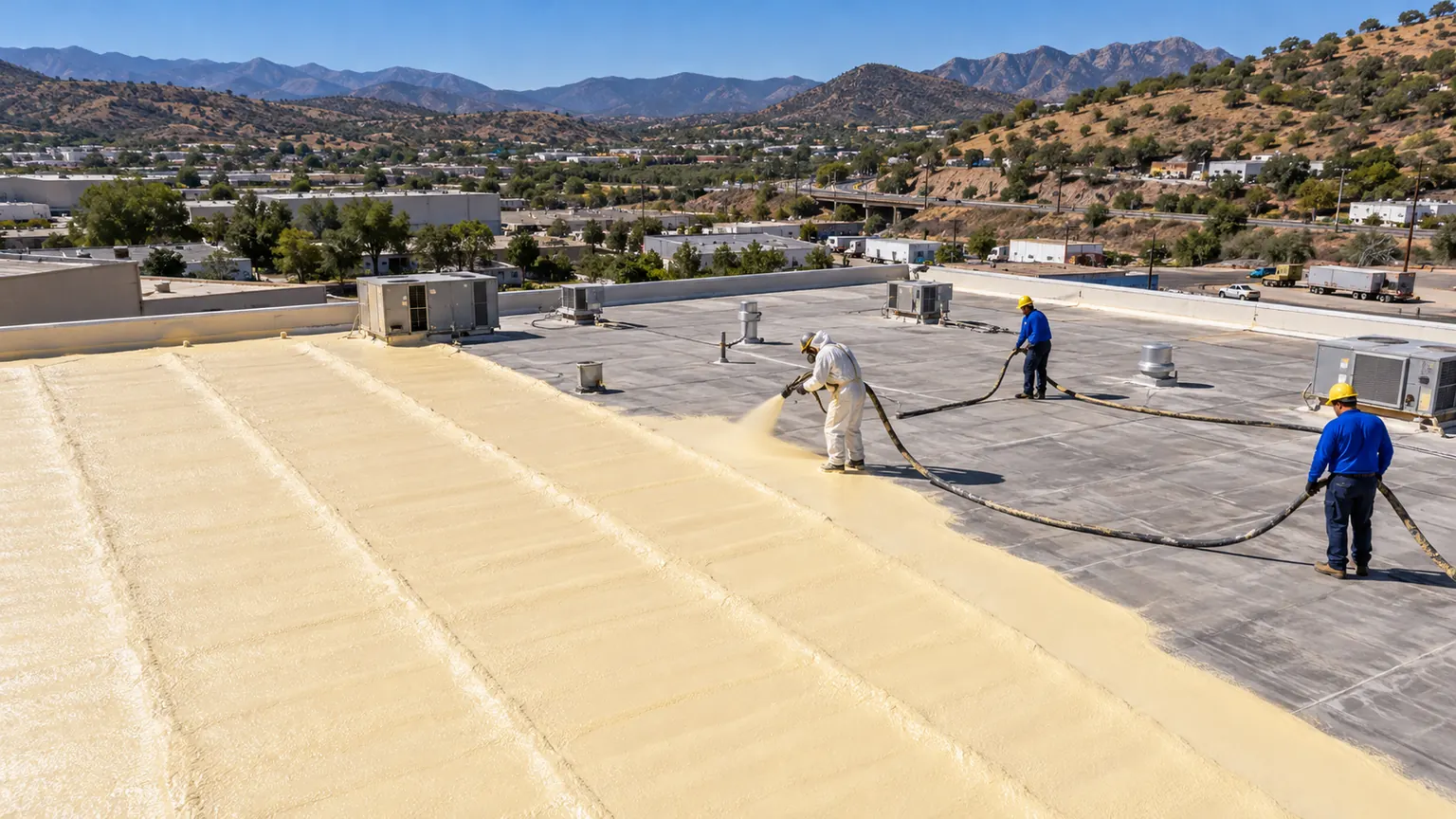
Drone view of a flat roof being foamed in lanes beside the old roof surfaceTan Foam, Coated

Spray Foam Roofing

Many Amado roofs are spray foam. Storm repairs and timely recoats keep the foam dry and in service for years.

Goes Over
Dry built-up, metal, and concrete decks
Recoat With
Silicone or acrylic, matched to the old topcoat
Spray foam roofing in Amado
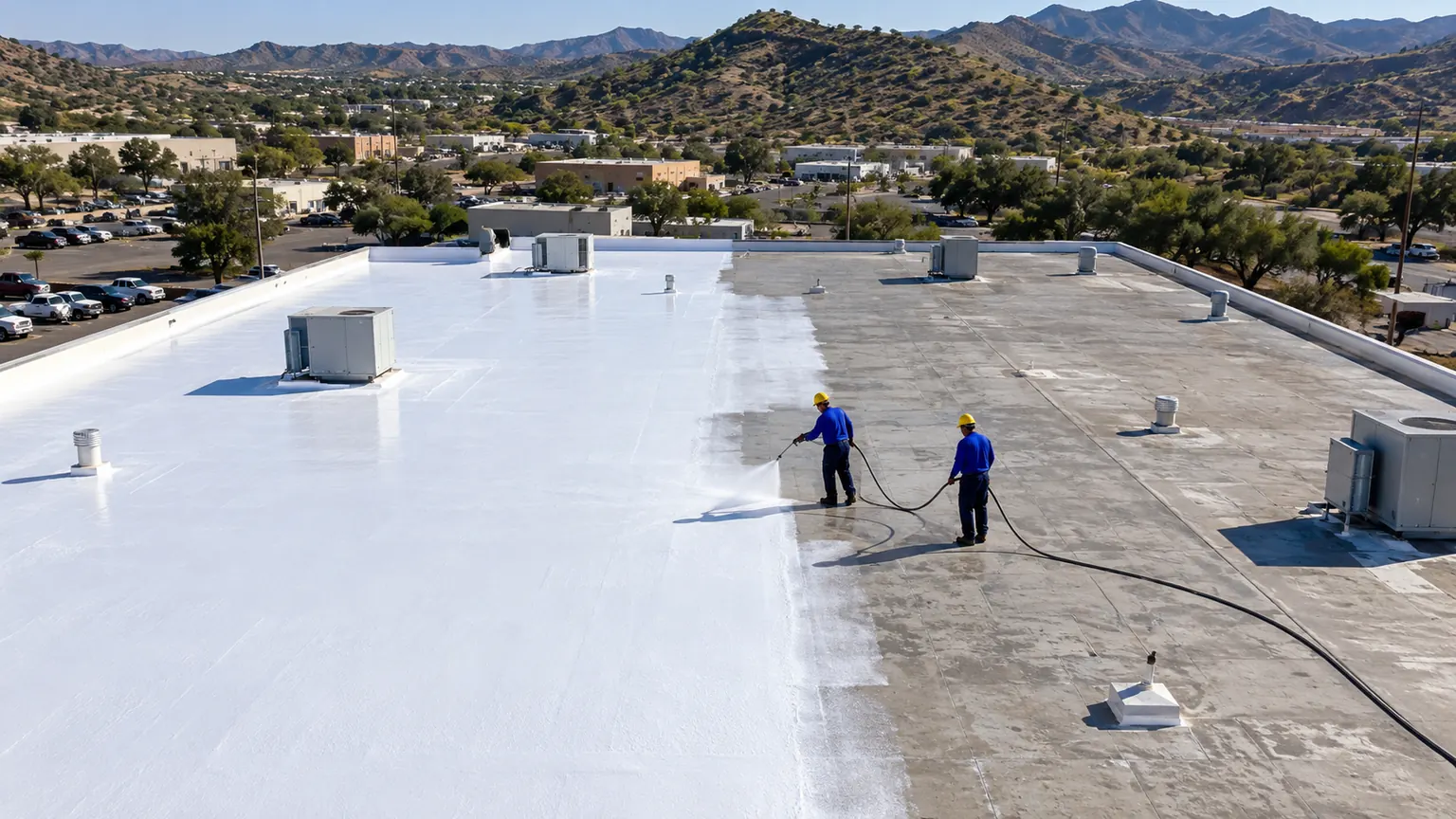
Drone view of a crew spraying a lane of white silicone across a large flat roofBright White Silicone

Silicone Roof Coating

Silicone topcoats suit foam and low-slope roofs here that hold some water after heavy storms.

Goes Over
Built-up, modified bitumen, single-ply, and foam
Recoat With
Silicone only, after cleaning
Silicone roof coating in Amado
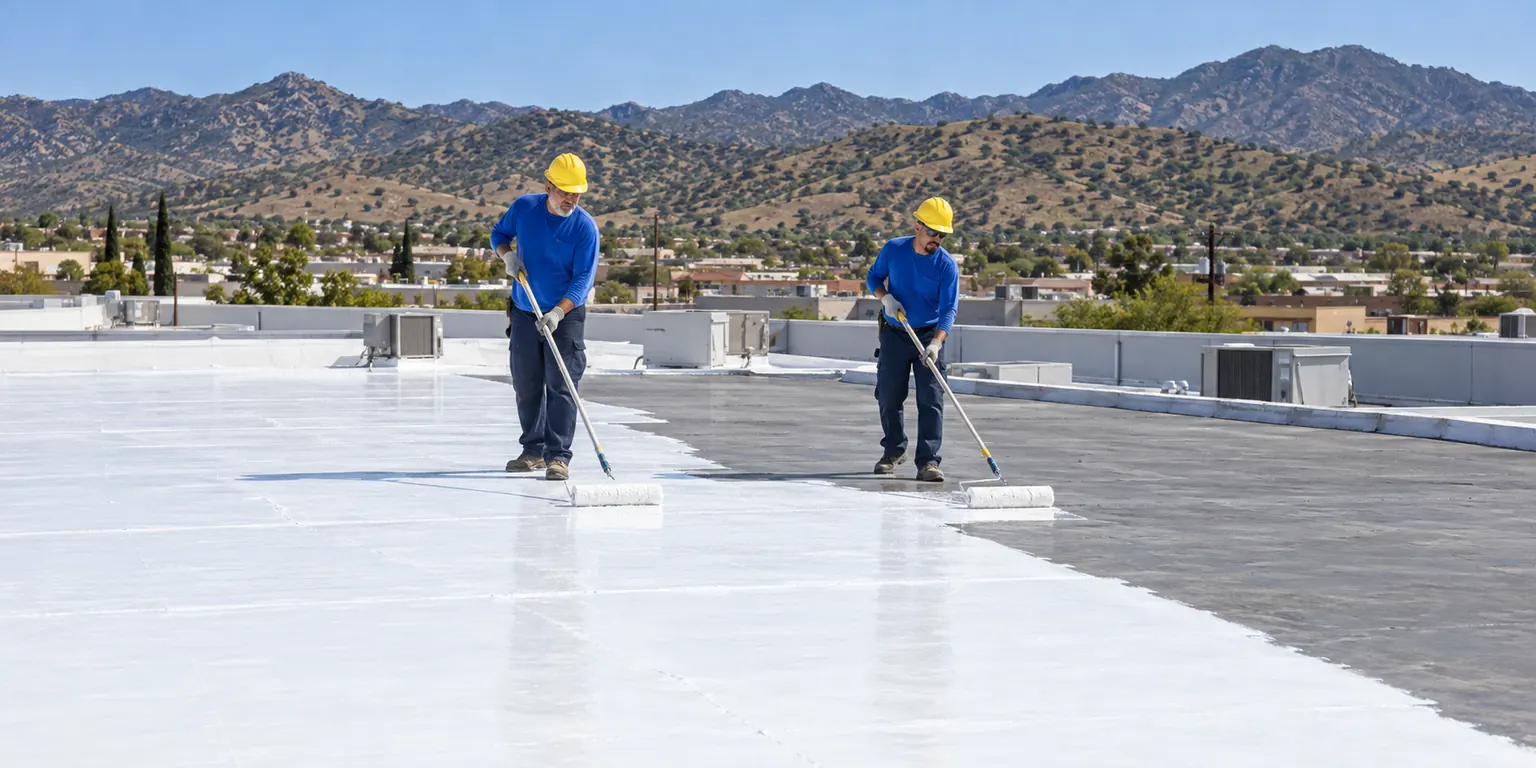
Two roofers rolling white acrylic coating over a low-slope commercial roofMatte White Acrylic

Acrylic Roof Coating

Acrylic suits Amado roofs that drain quickly and sit beside dusty frontage roads and lots.

Goes Over
Metal, foam, and drained low-slope roofs
Recoat With
Acrylic or silicone after priming
Acrylic roof coating in Amado
Roof drain and scupper packed with leaves and dust with water standing around them

Hail Just Hit The Roof?

Call after a hailstorm or high wind, and describe what you can see from the ground or a ladder. We will set up a roof check.

Post-Storm Roof Work In Amado

The steps are the same whether the roof needs a few repairs or a full recoat.

  1. Inspect Your Roof

    We walk the full roof after the storm, mark hail dents, pecks, lifted edges, and curb cracks, and core any spot that might have let water into the foam.

    Roofer showing a building owner the layers in a core sample cut from a flat roof
  2. Cut Out Wet Foam

    Foam that took on water through a crack is cut out and replaced with new foam, so the repair starts from dry material. The new foam is sealed with base coat promptly.

  3. Fill Dents And Pecks

    Dents and peck holes are cleaned, filled with sealant or foam as needed, and spot-coated to bring them back to full thickness. Each spot is brought back to the same coating thickness as the roof around it.

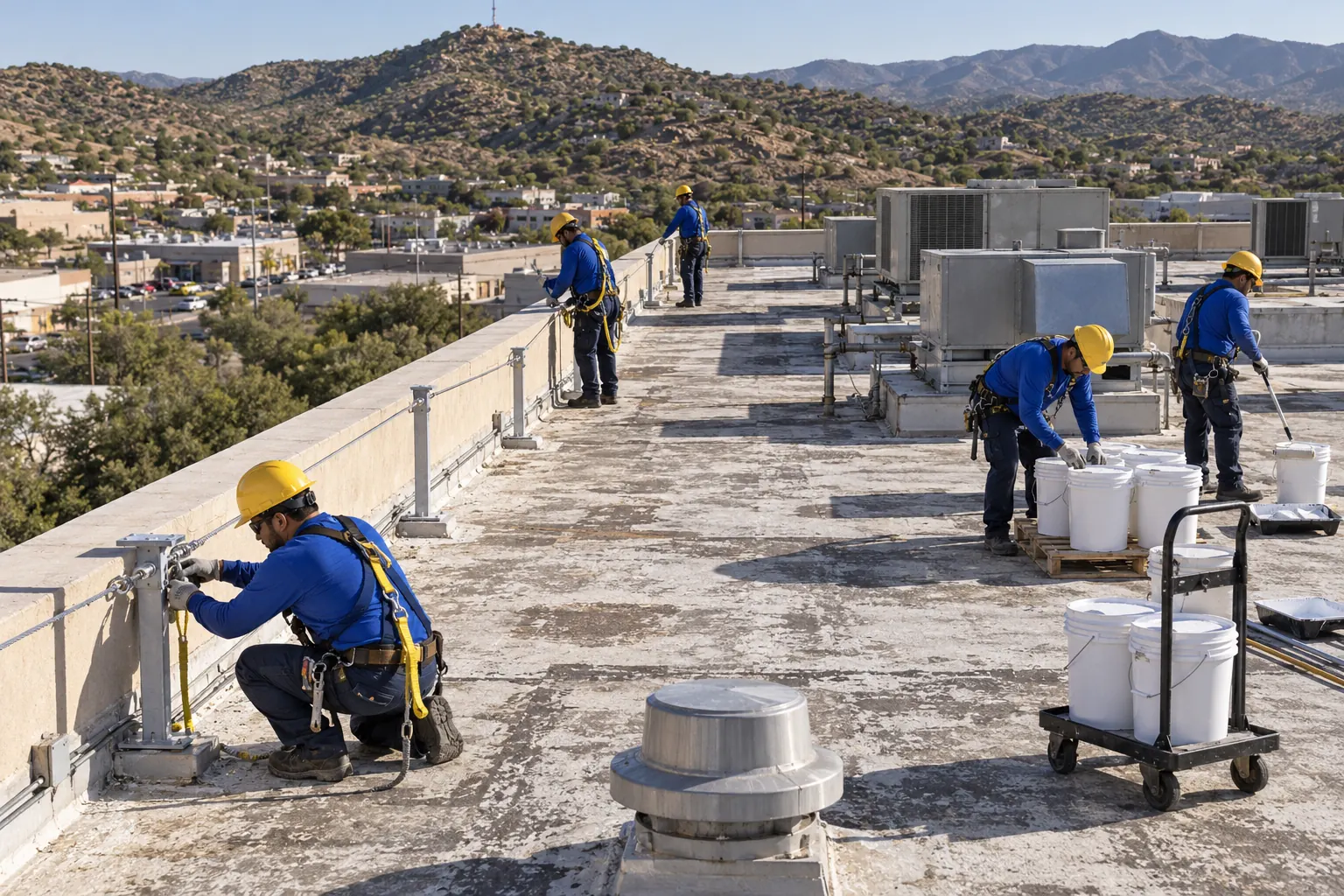
    Crew setting a fall-protection line and staging coating pails on a flat roof
  4. Secure Edges And Curbs

    Lifted edge metal is refastened and sealed, and cracks around rooftop units get fabric reinforcement set in coating. Loose flashing screws at the units are replaced at the same visit, and the curb corners get an extra coat.

  5. Recoat If Due

    When the topcoat is thin across the roof, the whole surface is cleaned and recoated to spec thickness, with readings logged as the crew works.

Other Towns South Of Amado

Amado is the northern end of the I-19 towns we serve.

Service-area map, not to scale: Nogales on the U.S.–Mexico border; Rio Rico, Tumacacori-Carmen, Tubac, and Amado north along I-19 and the Santa Cruz River; Patagonia northeast on SR 82. Each place is drawn as its common building type.I-19SR 82Santa Cruz RiverU.S.–Mexico borderNNot to scaleNogalesRio RicoTumacacori-CarmenTubacAmadoPatagonia
  • Tubac

    A short drive south, with gallery and shop roofs.

  • Tumacacori-Carmen

    Farm and small metal roofs farther south on I-19.

  • Rio Rico

    Wide low-slope roofs near Nogales.

  • Patagonia

    Storefront roofs east on SR 82.

Amado Roof Coating Questions

How should a coated roof in Amado be maintained?

Two inspections a year, plus one after hail, keep a coating working. Schedule one in late spring before the monsoon and one in fall before freezing nights.

Each visit clears drains and scuppers, checks worn spots along walk paths and around units, reseals skylights, boots, and parapet flashing, and notes ponding rings. Small touch-ups between recoats stretch the coating's life.

Who issues permits for roof work in Amado?

Amado is unincorporated and mostly in Santa Cruz County, with some north-end parcels in Pima County. Check the county assessor record for the parcel, then contact the Santa Cruz County Building Department or Pima County Development Services.

How do I know if hail damaged my foam roof?

Look for round dents, cracked coating, and chips of topcoat at the drains. Damage is easiest to see in low morning light. A roof walk confirms it and checks whether water got into the foam.

Should I document storm damage before repairs?

Yes. Dated photos of the roof, the inside of the building, and any debris help if you file an insurance claim. Contact your insurer before discarding damaged parts, and keep receipts for any temporary repairs.

Can a few hail dents wait until the next recoat?

Small dents where the coating did not crack can wait. Cracked dents let water into the foam, and wet foam has to be cut out, so those are repaired the same season.

Why do birds peck at foam roofs?

Birds pick at foam for insects or nesting material, mostly where the topcoat is thin. Keeping the topcoat at full thickness and filling pecks quickly limits the damage.

How often does a foam roof need a recoat?

It depends on the topcoat type and thickness and on how much sun, traffic, and hail the roof sees. The twice-a-year checks show when the topcoat is wearing thin, before bare foam appears.

Can you get to a roof on an isolated lot easily?

Yes. Open lots usually make access simpler, with room to park the rig and set a lift. Material is staged away from customer parking and the highway frontage.

Get The Roof Checked After The Storm

Request an inspection after hail or high wind, or call and tell us what you saw from the ground.

Call Us +1 (623) 310-0223