Rio Rico, Santa Cruz County

Rio Rico Commercial Roof Coating

Rio Rico commercial roof coating for wide distribution and light industrial roofs, starting with where water stands after a storm and why.

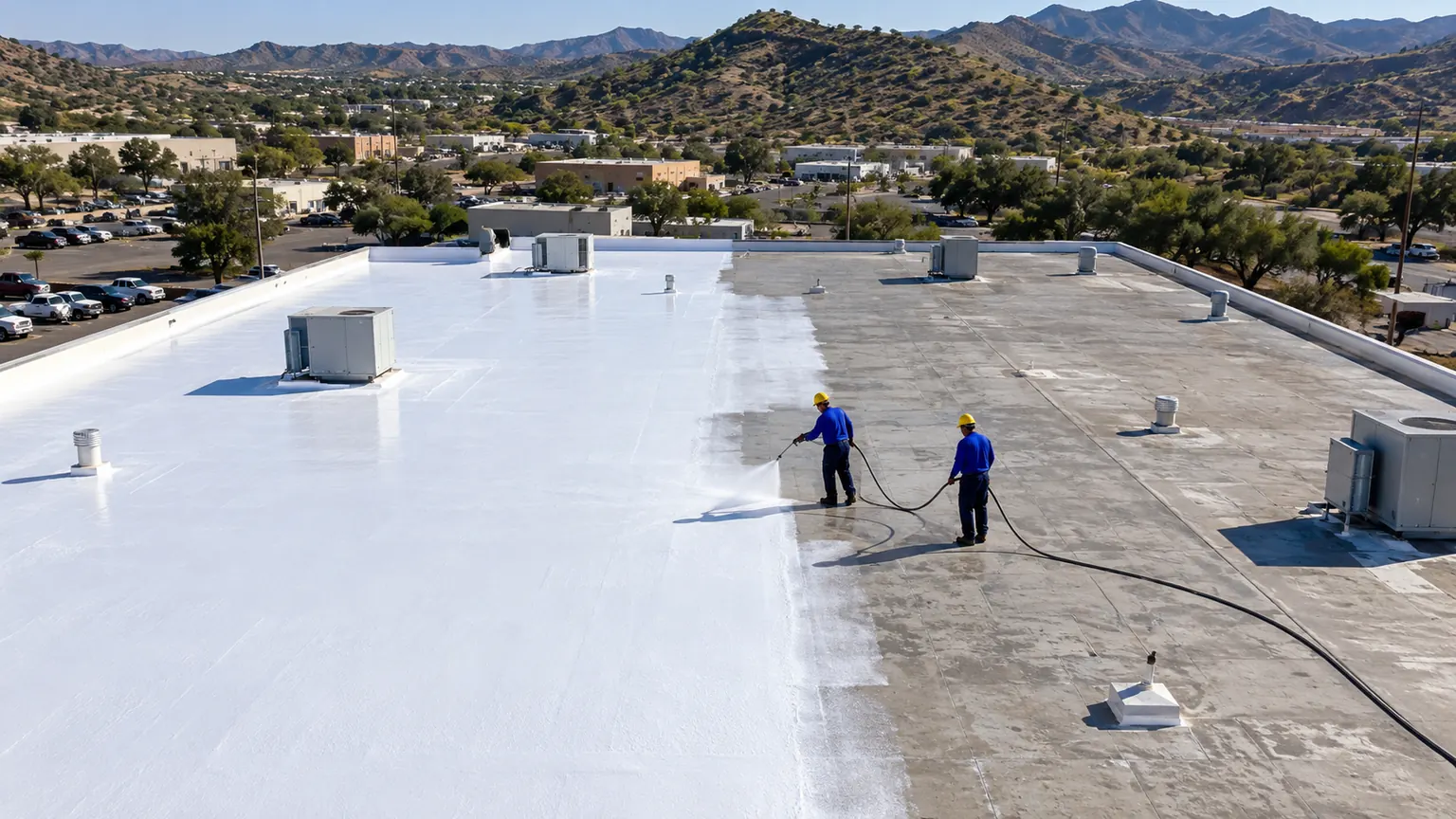
Drone view of a crew spraying a lane of white silicone across a large flat roof

Wide Roofs That Hold Water

Rio Rico sits just north of Nogales along I-19, and much of its commercial space sits under broad low-slope roofs.

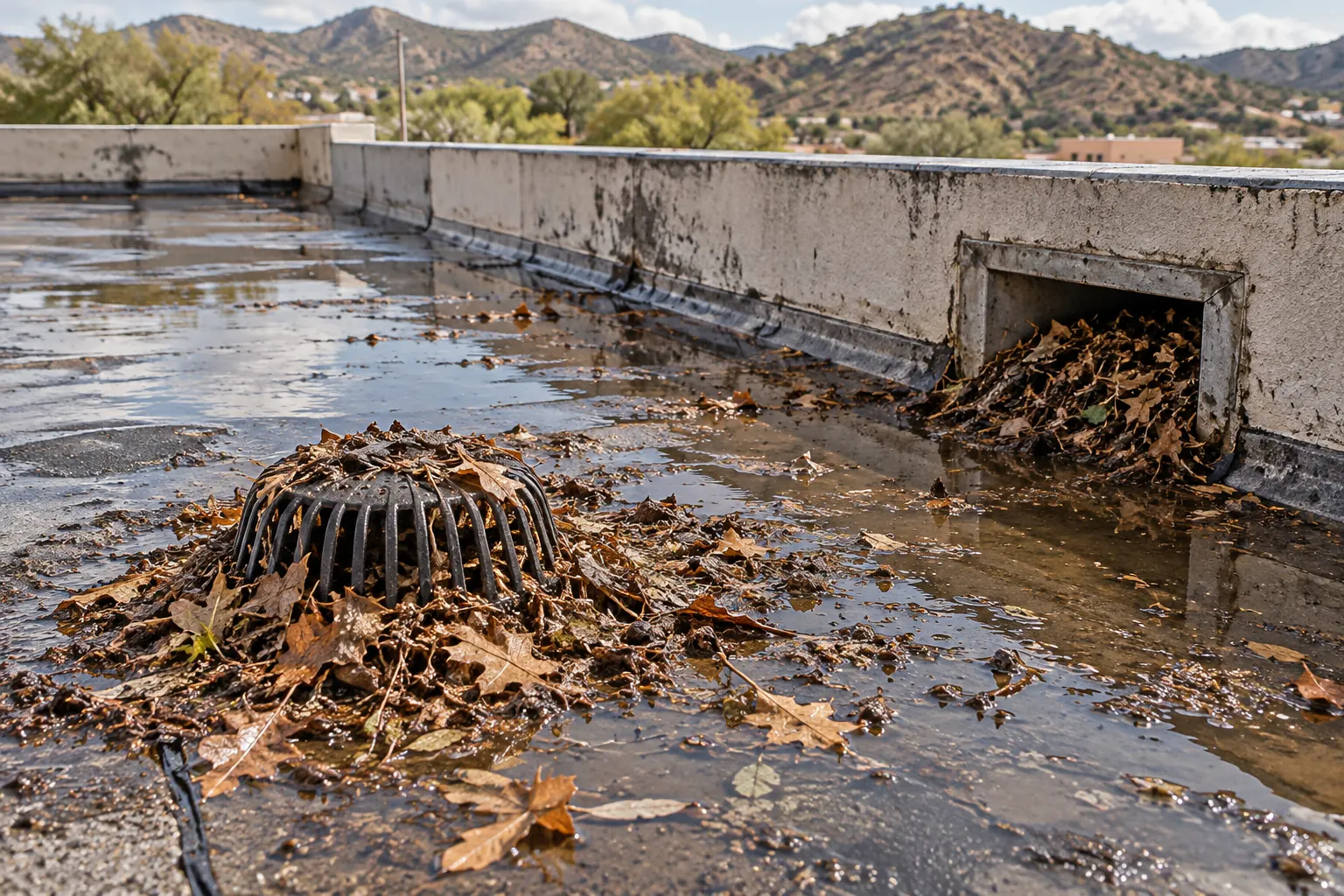
Roof drain and scupper packed with leaves and dust with water standing around them

A roof hundreds of feet across needs only a slight sag between drains to hold water. After summer storms, that water can sit for a day or more, and the dust it leaves behind marks the ring.

Ponding rings are where coatings wear through first, so we start every Rio Rico roof by finding them, checking the insulation under them, and planning the coating around them.

  • Drains checked for height, clogs, and loose clamping rings
  • Core cuts under ponding rings before any coating
  • Silicone or extra passes where water stands
  • County building department for unincorporated Rio Rico

Where Water Sits On A Rio Rico Roof

Low-slope roofs collect water in the same few places. The numbers on the plan match the list below.

12345
  1. Rings Between Drains

    Long spans sag a little between structural supports, and that is where water lingers. The dried dust ring shows the edge of each pond and where extra coating thickness belongs.

  2. High Or Clogged Drains

    A drain set slightly above the surrounding roof leaves a shallow pond around it. Strainers clogged with dust and debris do the same after every storm.

  3. Wet Spots Under Ponds

    Water that sits long enough finds small openings, and the insulation under a pond is the first to get wet. Core cuts confirm it stays dry before coating.

  4. Seams Crossing Low Areas

    Lap seams that run through a ponding area are underwater for hours at a time. Those seams get fabric reinforcement before anything else is coated. Seams on higher ground get the same treatment later.

  5. Equipment On Wide Roofs

    Rooftop units spread across a big roof each add a curb and a service path. Curb flashing and the paths to it are checked for tears and wear.

Benefits of Coating Your Roof

On a Rio Rico roof that is dry underneath, coating can bring these results.

  • Lasts In Ponds

    Silicone and thicker passes hold up in the rings where water sits after storms, the same spots where a worn roof surface fails first.

  • Keeps Docks Moving

    Coating happens on the roof surface in sections, so trucks, forklifts, and staff below keep working through the job.

  • Saves The Membrane

    A broad roof membrane that is still attached and dry stays in place, which avoids hauling away tons of old material.

  • Cools Big Roofs

    A white surface across a large roof turns back much of the summer sun that would heat the building below.

Commercial Roof Coating Options for Rio Rico

Three systems cover most wide low-slope roofs in Rio Rico.

Flat roof seams reinforced with fabric and sealant next to a staged spray rigBright White Silicone

Silicone Roof Coating

Silicone is the first choice when water stands in rings between drains, since it keeps working under standing water.

Goes Over
Built-up, modified bitumen, single-ply, and foam
Recoat With
Silicone only, after cleaning
Silicone roof coating in Rio Rico
Two roofers rolling white acrylic coating over a low-slope commercial roofMatte White Acrylic

Acrylic Roof Coating

Acrylic suits the parts of a Rio Rico roof that drain within hours and sit beside dusty yards and gravel lots.

Goes Over
Metal, foam, and drained low-slope roofs
Recoat With
Acrylic or silicone after priming
Acrylic roof coating in Rio Rico
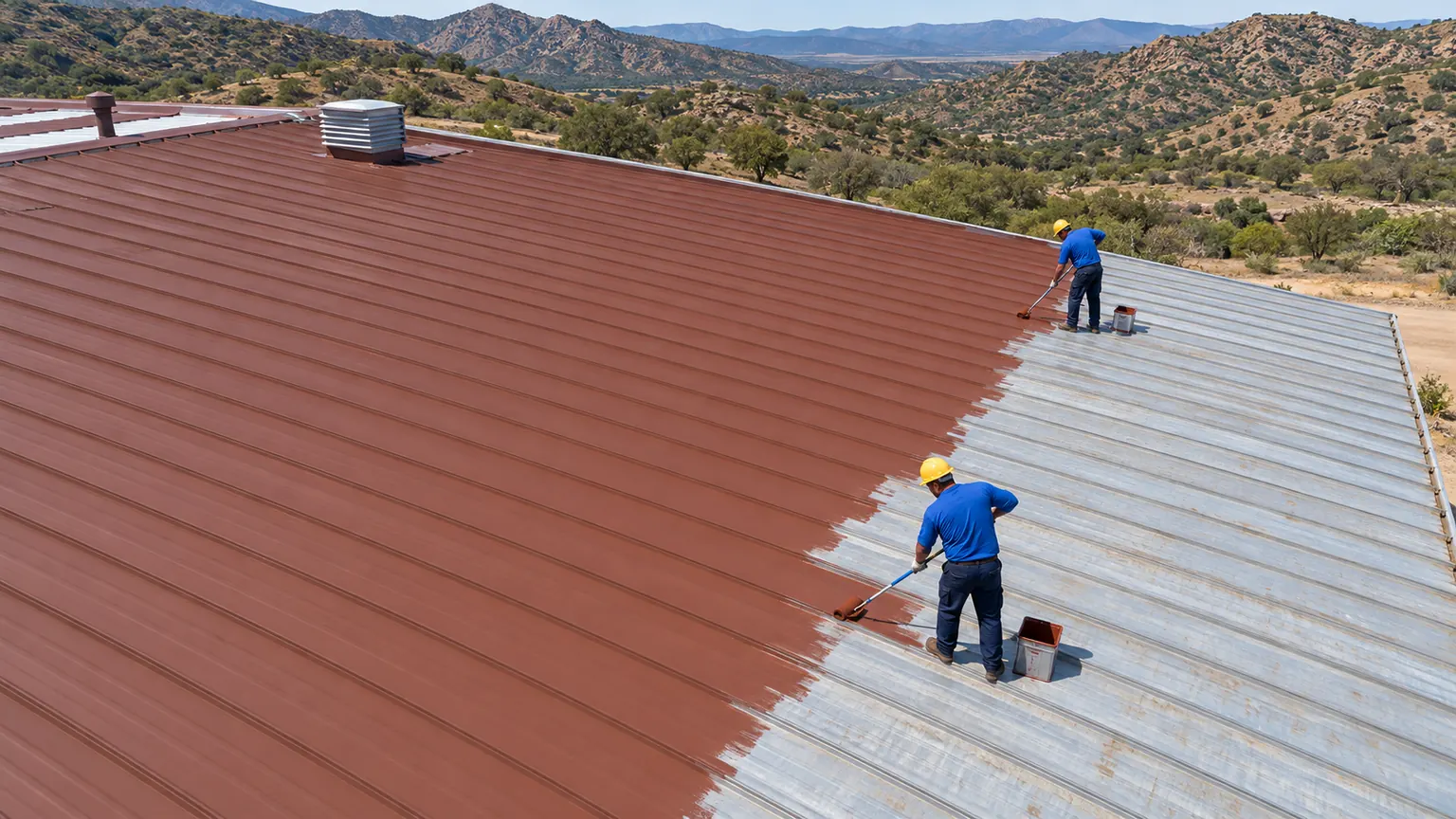
Two roofers rolling red-brown rust primer across a ribbed metal warehouse roofRed-Brown Primer, White Topcoat

Metal Roof Coating

Metal warehouse roofs here get fastener and lap work, rust primer, and a topcoat matched to how they drain.

Goes Over
Exposed-fastener and standing-seam steel
Recoat With
Acrylic or silicone, matched to the first coat
Metal roof coating in Rio Rico
Roofer showing a facility manager an adhesion test patch on a flat commercial roof

Ponds Lingering After Storms?

Water still standing on the roof a day after rain is the first thing we look at. Call and tell us where it sits and how long it stays.

Coating A Wide Roof In Rio Rico

Big roofs are coated in sections, and the low spots set the plan.

  1. Inspect Your Roof

    We walk the full roof, mark every ponding ring and drain, and take moisture readings under each one. Photos of the roof after a storm help if you have them.

    Roofer showing a building owner the layers in a core sample cut from a flat roof
  2. Fix Drains And Low Spots

    Clogged strainers are cleared and loose clamping rings tightened. Drains sitting too high, or ponds too deep for coating alone, get corrected before any coating is planned.

  3. Replace Wet Boards

    Insulation that reads wet under a pond is cut out and replaced. Coating a wet area would trap the water in the roof for years.

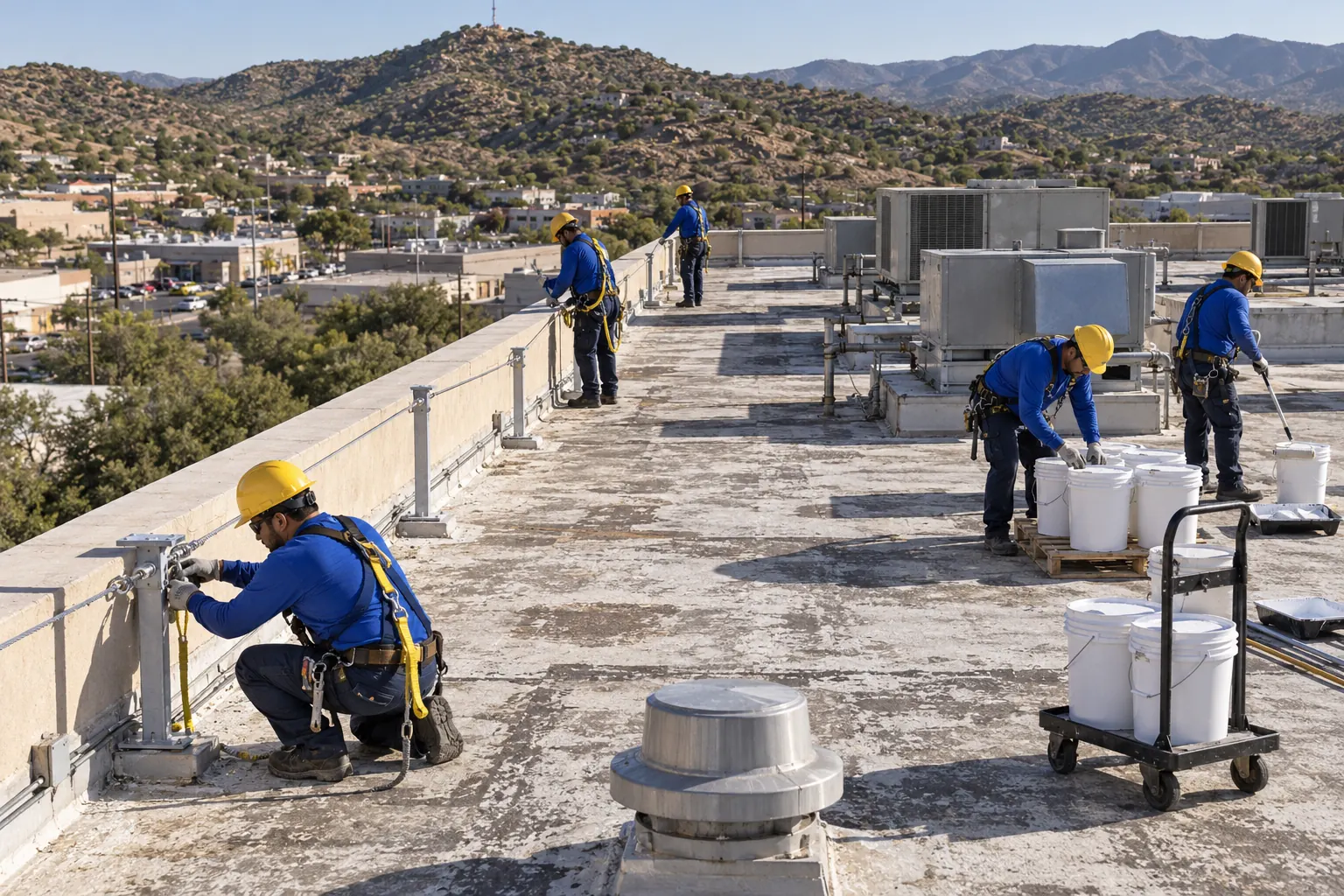
    Crew setting a fall-protection line and staging coating pails on a flat roof
  4. Reinforce Low Seams

    Seams that cross ponding areas and the membrane around each drain bowl get fabric set in coating, adding thickness where the water sits. Drain flashing is checked again after it is wrapped.

  5. Coat Section By Section

    The roof is coated in planned sections so operations below keep running. Low spots get extra passes, and thickness readings are logged as each section is finished.

Other Towns We Coat Roofs In

Rio Rico sits between Nogales and the towns farther up I-19.

Service-area map, not to scale: Nogales on the U.S.–Mexico border; Rio Rico, Tumacacori-Carmen, Tubac, and Amado north along I-19 and the Santa Cruz River; Patagonia northeast on SR 82. Each place is drawn as its common building type.I-19SR 82Santa Cruz RiverU.S.–Mexico borderNNot to scaleNogalesRio RicoTumacacori-CarmenTubacAmadoPatagonia
  • Nogales

    Cold storage and produce warehouse roofs along the border, a few miles south on I-19.

  • Tumacacori-Carmen

    Farm and small metal roofs farther north along the Santa Cruz River.

  • Tubac

    Gallery and shop roofs coated while the doors stay open.

  • Patagonia

    Main-street storefront roofs northeast on SR 82.

Rio Rico Roof Coating Questions

How thick should the coating be on a roof with ponding?

Thick enough to meet the coating maker's dry-mil spec for that product and surface, measured in thousandths of an inch. Crews check wet film thickness with a gauge as they go.

Thin spots wear through first at seams and ponding rings, so extra passes go over those areas, and the readings are recorded across the whole roof.

Who issues permits for roof work in Rio Rico?

Rio Rico is unincorporated, so roof work falls under the Santa Cruz County Building Department. A straight recoat is treated differently from work that replaces wet insulation or adds curbs, so check with the county before work starts.

Will a coating get rid of the ponding?

A coating lets the roof survive ponding; it does not move the water. Shallow ponds that dry within a day or two are handled with silicone and extra thickness. Deeper ponds call for drain work, tapered insulation, or foam first.

Can you coat part of a large roof?

Yes. Large roofs are often coated in phases, starting with the sections over the most sensitive spaces or the worst ponding. Each phase is finished to full thickness before the next begins.

How long does water have to be gone before coating?

The surface has to be fully dry, including under any dirt left behind by the pond. After monsoon storms that can take a few days of sun, and moisture readings confirm it before coating.

Do trucks and docks have to stop during the work?

No. The work is on the roof surface. Material is staged at a spot away from active docks, and the crew plans the lift or ladder access around truck traffic.

What does ponding do to an uncoated roof over time?

Standing water speeds up surface wear, loosens seams it covers, and collects dust that holds moisture against the roof. Over many seasons, water finds a way into the insulation below.

Is silicone the only option for a roof with ponding?

It is the usual choice where water stands. Parts of the same roof that drain well can take acrylic, and very deep ponds are better fixed with slope before any coating.

Book A Look At Your Rio Rico Roof

Request an inspection of the roof and its ponding spots, or call to describe the building and where water sits.

Call Us +1 (623) 310-0223