
Silicone Roof Coating

Nogales Silicone Roof Coating

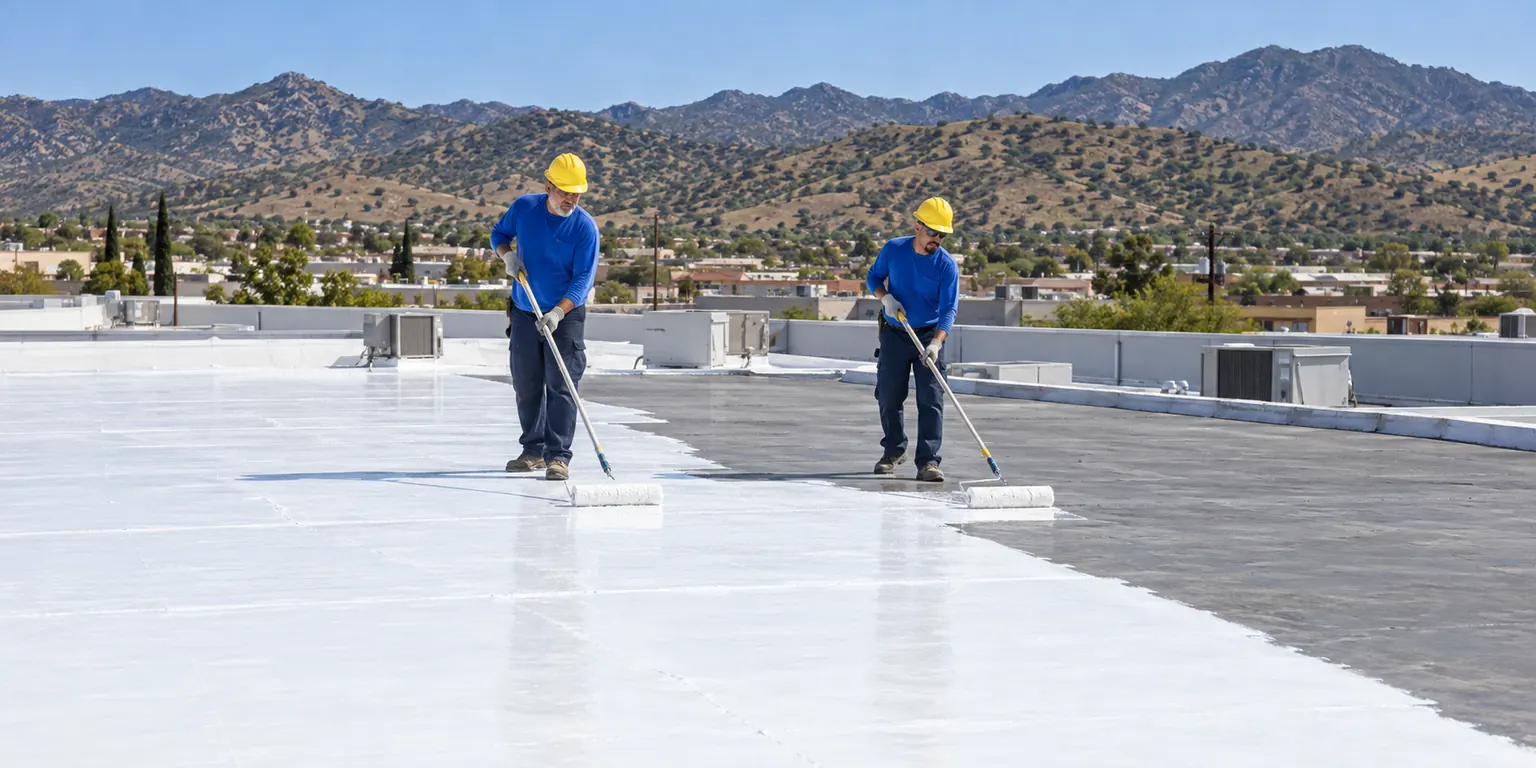
Silicone roof coating in Nogales for flat and low-slope roofs that hold water after storms. The insulation is checked dry before any silicone goes down.

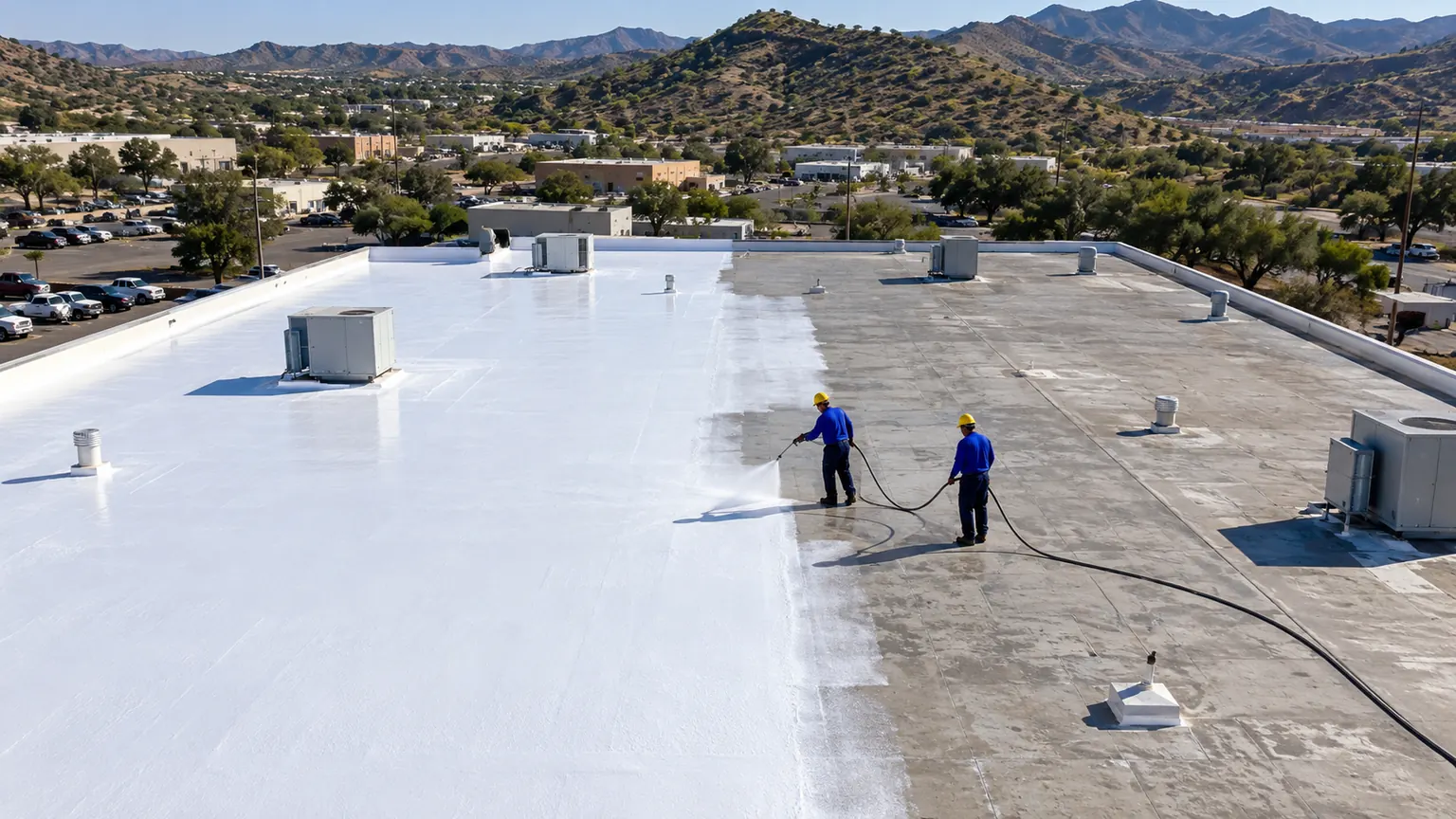
Drone view of a crew spraying a lane of white silicone across a large flat roof
  • Moisture survey before silicone
  • Built for ponding areas
  • Bleed-through primer on asphalt
  • Recoats with silicone only

Does Your Roof Suit Silicone?

Silicone earns its place on low-slope roofs with slow drainage. A few roof conditions point to a different coating or to repair first.

Silicone Fits

  • Water stands in a few low spots for a day after storms
  • Built-up, modified bitumen, or single-ply roofs with dry insulation
  • Aged foam roofs ready for a fresh topcoat
  • Roofs where the owner wants the fewest coats
  • Buildings near dusty lots where a white roof is still wanted

Look Elsewhere Or Fix First

  • An existing acrylic coating you want to recoat later with acrylic
  • Wet insulation under the low spots that hold water
  • A drain sitting above the roof surface
  • Heavy foot traffic paths with no walk pads planned
  • Gravel ballast still loose on the surface

Nogales Silicone Roof Coating Checkpoints

Silicone goes over flat roofs, and flat roofs leak at their low points and edges. Each numbered spot is opened up or cleaned before coating.

123456
  1. Ponding Areas

    Dried rings of dust show where water sat after the last storm. Those areas get core cuts to confirm dry insulation and receive extra silicone thickness.

  2. Drain Bowls

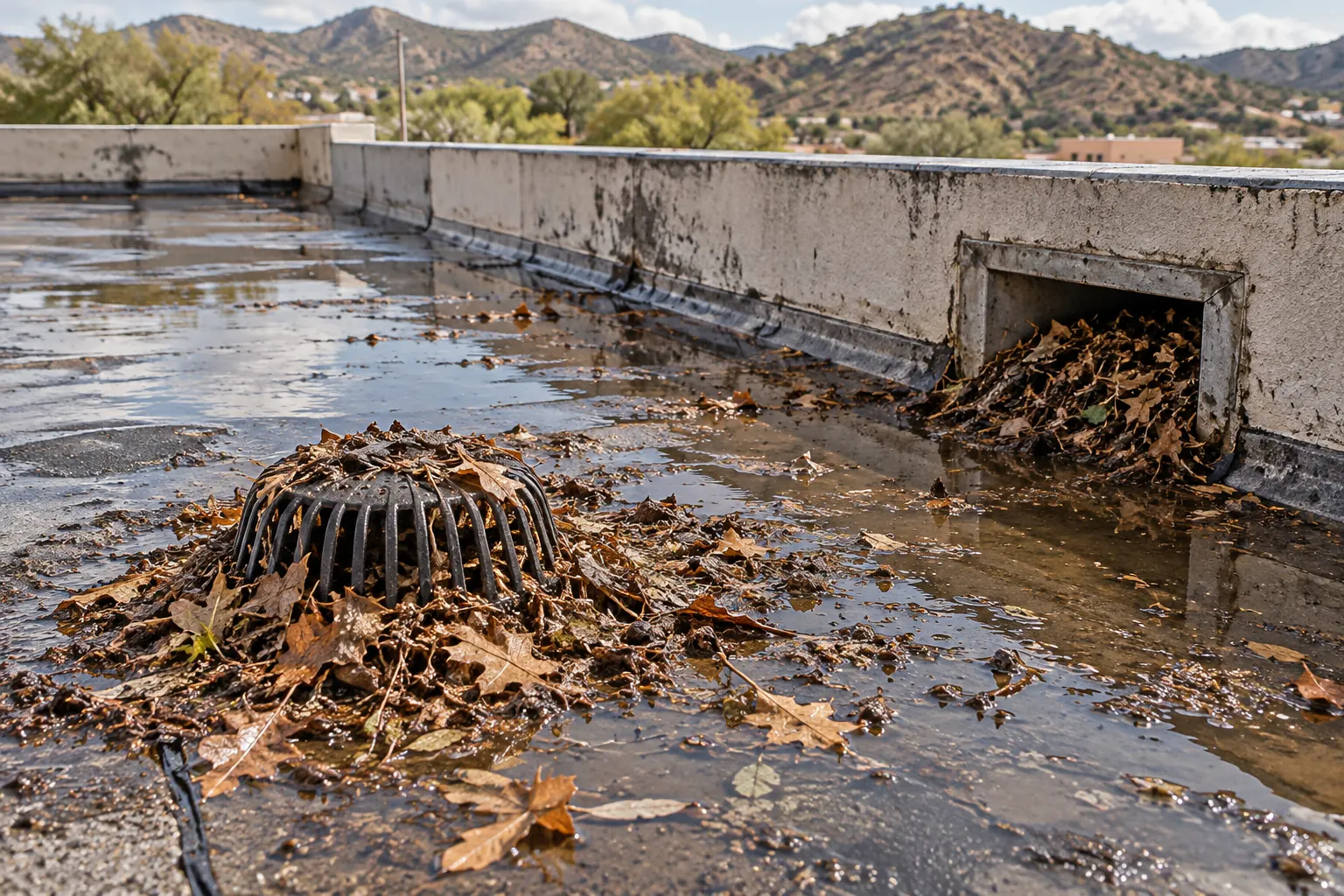
    Clamping rings loosen and strainers clog with leaves and grit. Drains are cleared and the membrane around each bowl is reinforced so water leaves the roof freely.

  3. Membrane Seams

    Open laps on single-ply and torch-down roofs are cleaned and reinforced with fabric set in silicone. Silicone bonds best to clean, dry seams.

  4. Equipment Curbs

    Service techs kneel and set tools around these curbs, so flashing gets scuffed and torn. Damaged corners are rebuilt before the curb is coated up its sides.

  5. Scuppers Through Parapets

    Scupper boxes rust at their corners and the sealant behind them dries out. Each scupper is resealed where it passes through the parapet wall.

  6. Pipe Boots

    Rubber boots around vent pipes crack in the sun. Cracked boots are replaced, and the new boot is wrapped with fabric before the field coat.

Commercial Roof Coating Options for Nogales

Silicone build-ups change with the surface underneath and with how much water the roof holds.

Build-UpGoes OverWhen It Fits
Silicone base and top coatClean single-ply, TPO, or PVCRoofs with good adhesion test results and few repairs
Bleed-blocking primer plus siliconeAged built-up or modified bitumenAsphalt roofs where oils would stain a white coat
Silicone with extra passes at low spotsAny approved base with ponding ringsRoofs that hold water near drains after storms
Silicone over a fresh foam layerBuilt-up roofs needing slope or insulationRoofs where ponding needs more than a thicker coat

Benefits of Coating Your Roof

On a dry, repaired roof, a silicone coating can do the following. None of it replaces fixing wet insulation or a high drain.

  • Handles Standing Water

    Silicone holds up in low spots where water sits for a day after a monsoon storm, where other coatings soften and wear away.

  • Avoids Tear-Off

    The membrane already on the roof stays in place, sparing the building the cost and mess of removing it.

  • Reflects Summer Sun

    A bright white silicone surface turns back much of the sunlight that heats a dark membrane through a long Nogales summer.

  • Recoats Cleanly

    Years later, a cleaned silicone roof takes a fresh silicone coat over the old one, with no tear-off.

Roof drain and scupper packed with leaves and dust with water standing around them

Water Standing After A Storm?

Ponding that lingers a day or two is where membranes wear through first. Tell us the roof size and type to see a ballpark for a silicone coat.

How A Silicone Roof Gets Coated

The low spots and seams get the most attention. The field coat goes on last.

  1. Inspect Your Roof

    Moisture readings and core cuts check the insulation under every low spot, since silicone over wet insulation traps water. Drains, curbs, and seams are logged for repair.

    Roofer showing a building owner the layers in a core sample cut from a flat roof
  2. Replace Wet Insulation

    Wet boards found in the survey are cut out and replaced with new insulation and membrane patches, so the whole roof is dry before coating.

  3. Clean And Test Adhesion

    A power wash removes dust and chalk. Small test patches on each type of roof surface show whether silicone bonds directly or needs a primer first, and the results are recorded.

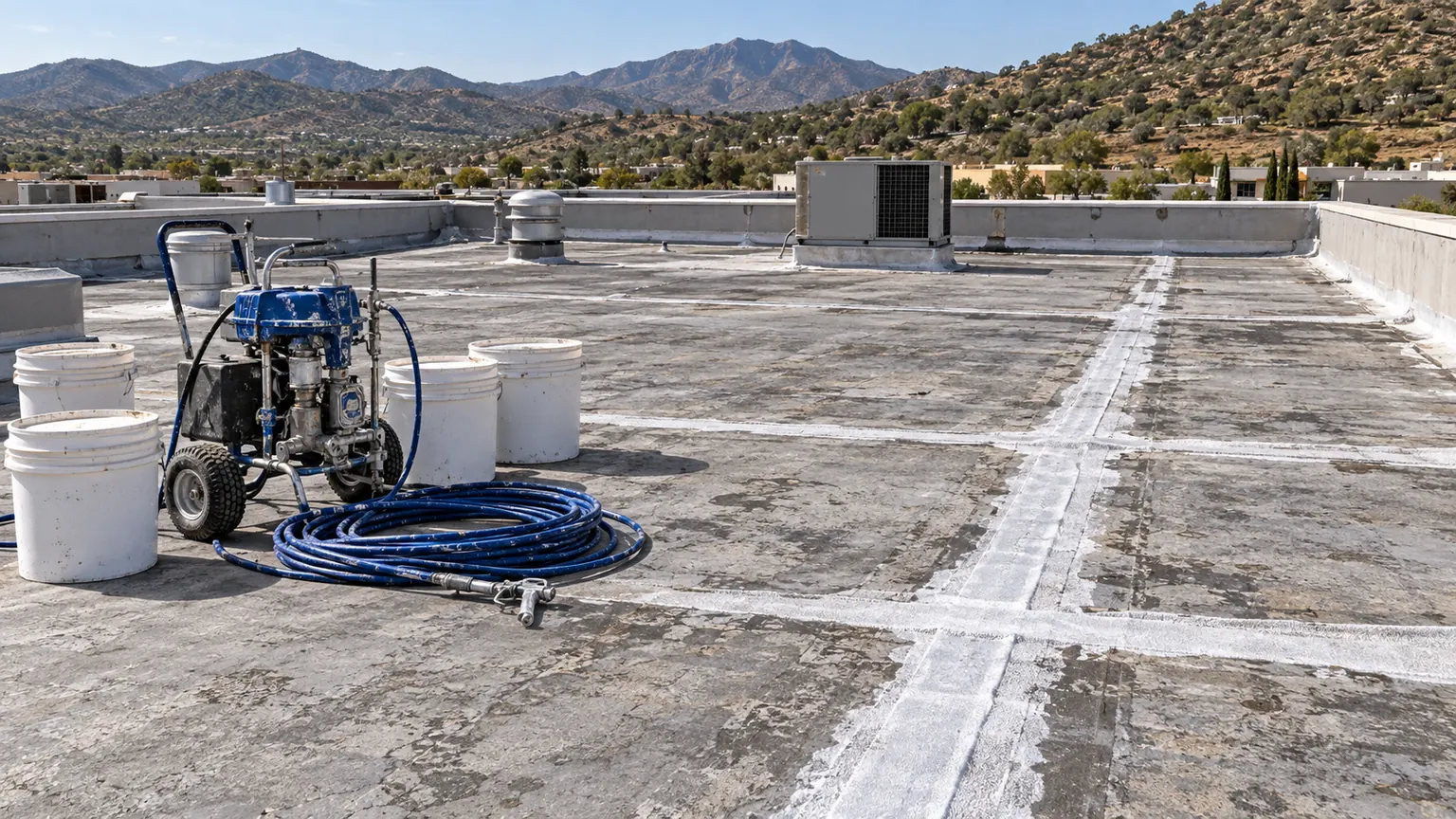
    Flat roof seams reinforced with fabric and sealant next to a staged spray rig
  4. Reinforce Seams And Drains

    Seams, curbs, pipe boots, and drain bowls are wrapped with fabric set in silicone. That builds extra thickness at the spots where water collects and where leaks usually begin.

  5. Spray And Check Thickness

    Silicone is sprayed in lanes across the field, with extra passes over the low spots near drains. Wet-film readings are taken and recorded as each lane is finished.

Other Coatings For Low-Slope Roofs

Two other systems often come up when a flat roof is being restored.

Two roofers rolling white acrylic coating over a low-slope commercial roofMatte White Acrylic

Acrylic Roof Coating

Acrylic suits flat roofs that drain within hours and sit near dusty lots, where its surface sheds dirt better than silicone does.

Goes Over
Metal, foam, and drained low-slope roofs
Recoat With
Acrylic or silicone after priming
Acrylic roof coating in Nogales
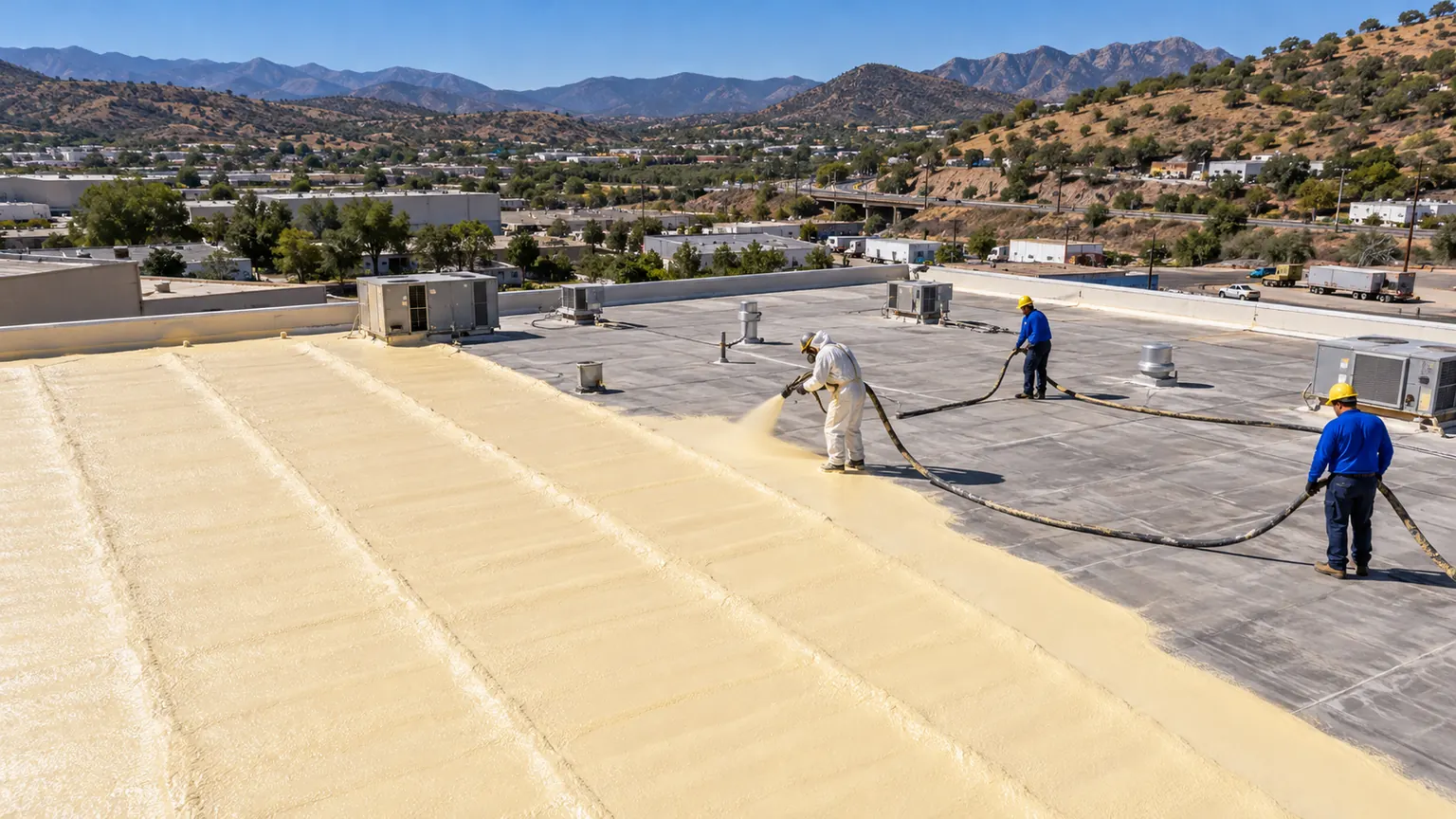
Drone view of a flat roof being foamed in lanes beside the old roof surfaceTan Foam, Coated

Spray Foam Roofing

Spray foam can build slope toward the drains on roofs where ponding is too deep for extra coating thickness to handle.

Goes Over
Dry built-up, metal, and concrete decks
Recoat With
Silicone or acrylic, matched to the old topcoat
Spray foam roofing in Nogales

Silicone Roof Coating Questions

Silicone or acrylic on a flat roof in Nogales?

It turns on drainage, dust, and what already covers the roof. Silicone fits low-slope roofs that hold water after monsoon storms. Acrylic fits roofs that drain well and collect heavy dust.

Silicone bonds well only to more silicone at recoat time and cures with moisture in the air. An adhesion test on the existing surface settles which one will bond.

Why does silicone get dirty faster than acrylic?

Silicone surfaces hold airborne dust, so a white silicone roof near unpaved lots dulls to light gray over time. Rain and occasional washing bring much of the brightness back. The roof keeps doing its job either way.

Can silicone go over an old acrylic coating?

Often yes, after cleaning and an adhesion test. Going the other way is the problem: acrylic does not bond well over silicone. Once a roof is silicone, future recoats are silicone too.

How thick does silicone go on?

Thickness follows the coating maker's dry-mil spec for that product and roof surface. Low spots and seams get extra passes. Crews check wet film thickness as they spray and write the readings down.

Will silicone fix ponding water?

Silicone tolerates ponding, so it lasts where water sits. It does not raise low spots or lower a high drain. Deep or long-lasting ponding is corrected with tapered insulation, foam, or drain work first.

Can you walk on a silicone roof?

Service techs can walk on it, though silicone is slick when wet and wears faster under daily traffic. Walk pads along paths to rooftop units protect the coating where people step most.

Does silicone smell during application?

Many silicone products carry solvent, so rooftop air intakes near the work are covered or shut down while that section is sprayed. Low-odor silicone products exist for occupied buildings and are discussed at the inspection.

Price A Silicone Coat For Your Roof

Enter the roof size and type for a ballpark coating range, or call to talk about the ponding and seams you are seeing.

Call Us +1 (623) 310-0223