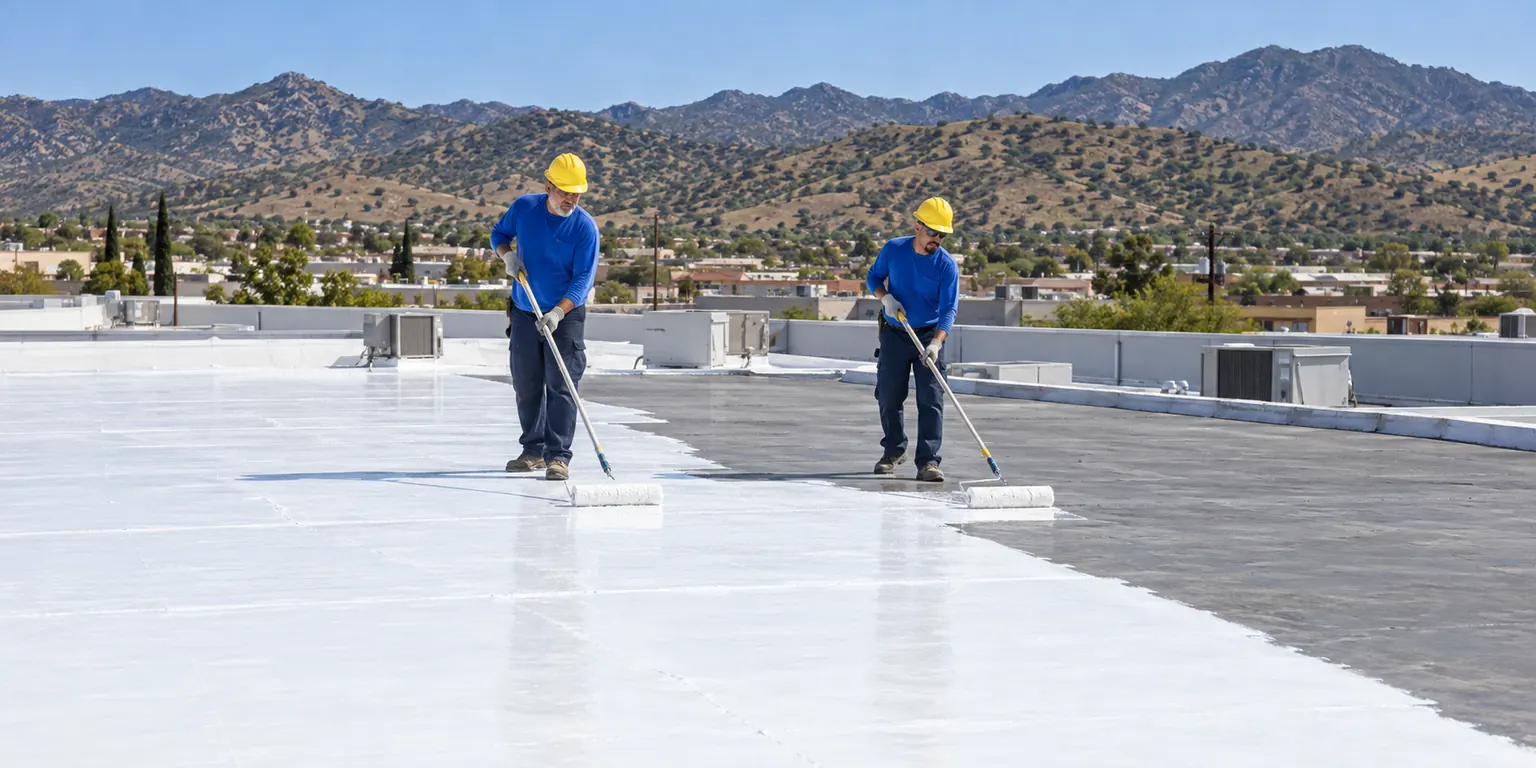
 Matte White Acrylic
Acrylic Roof Coating
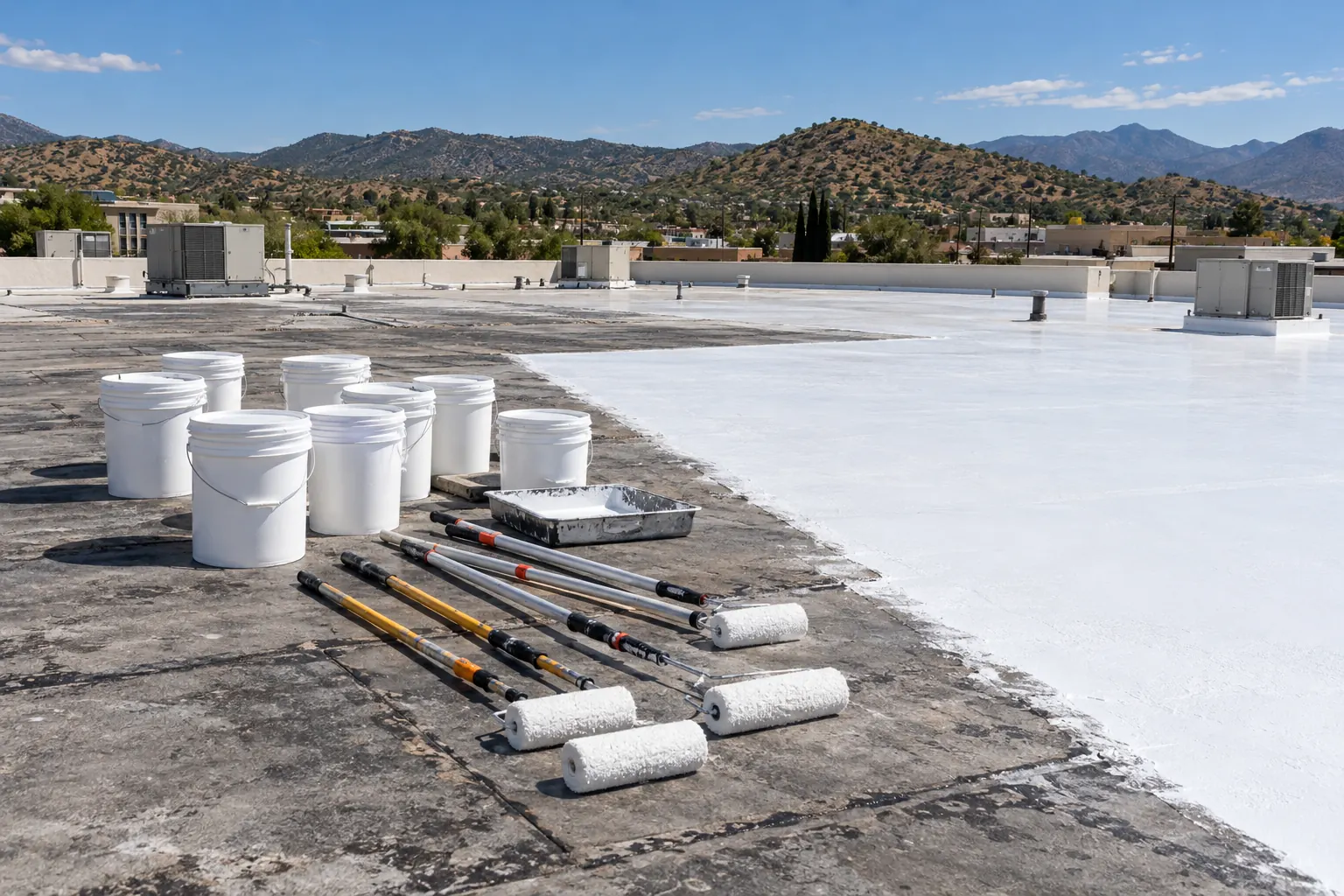
Water-based acrylic has a mild odor, a good match for small roofs over galleries and shops that stay open.
- Goes Over
- Metal, foam, and drained low-slope roofs
- Recoat With
- Acrylic or silicone after priming

Tubac commercial roof coating for galleries, shops, and studios that keep their doors open while the roof above them is coated.
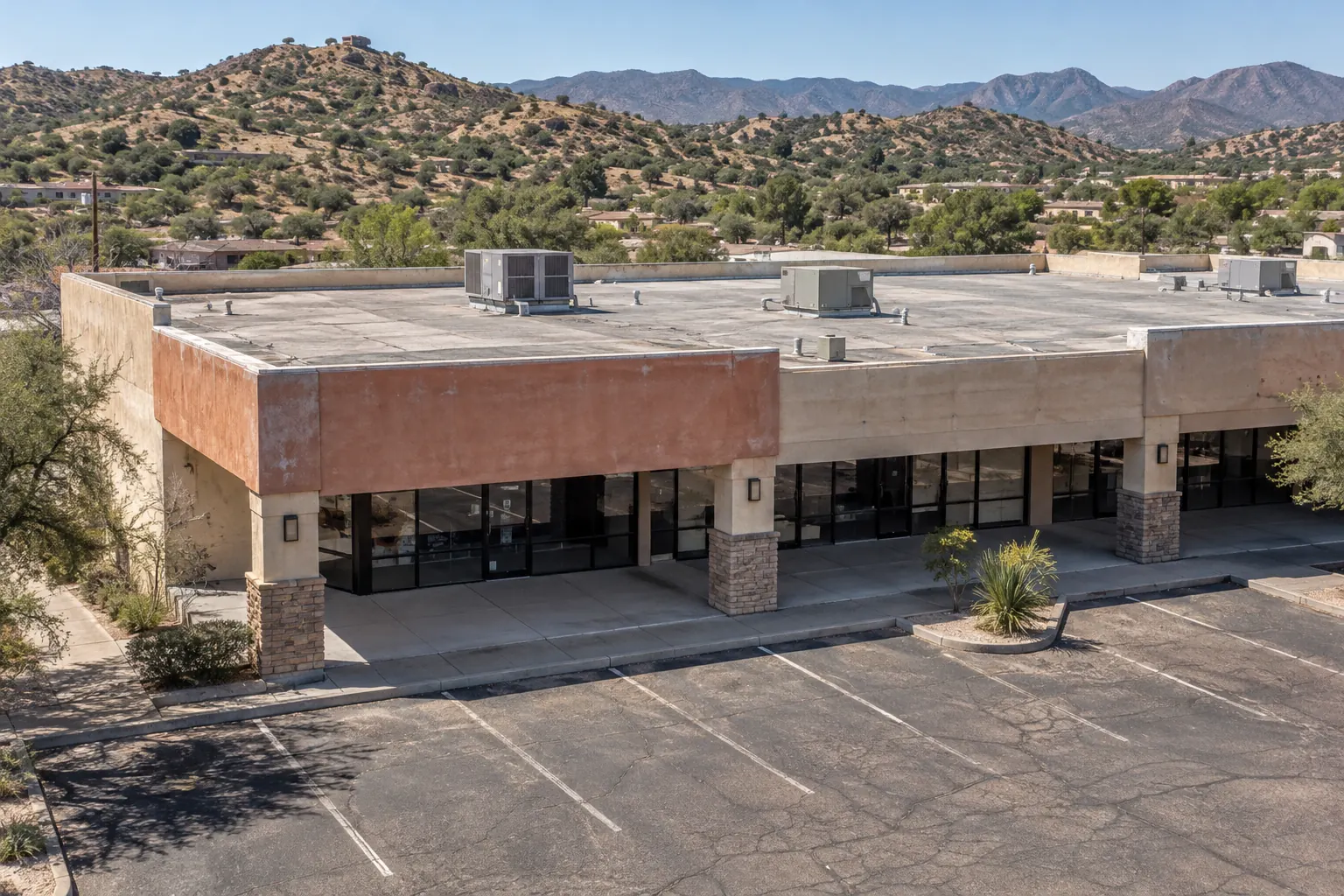
Tubac's shops and galleries rarely close for roof work, so the job is planned around the people inside.

Most of these buildings are small, single-story roofs behind low parapets, sitting right above display rooms and front doors. Coating them well is mostly about sequence: which section goes first, where the crew sets up, and when the noisier prep happens.
Owners and tenants get the schedule ahead of time, and the work near entrances is done by roller rather than spray.
Small shop roofs share the same weak points. The numbered spots match the list.
Low parapets carry a cap or coping that cracks at its joints. Water running down the inside of the wall shows up as stains on gallery walls below.
Many small roofs drain through scuppers in the parapet. Debris builds up at the opening, and the sealant around the scupper box dries out in the sun.
Evaporative coolers and small rooftop units leak water onto the roof and wear the coating around their curbs. Their drip lines and curbs get checked first.
Plumbing vents and flues pass through small roofs in several spots. Cracked rubber boots are replaced before the coating wraps each pipe. The pipe base gets fabric so the joint flexes with the roof.
Older shop roofs often carry layers of patches. Loose patches are removed so the coating bonds to a firm surface. Firm patches stay and get coated over with the rest of the roof surface.
For an occupied shop or gallery, coating a dry, repaired roof can mean the following.
Work happens on the roof surface, and sections near entrances are rolled by hand, so customers keep coming in.
Skipping roof tear-off avoids hours of demolition noise and debris chutes beside a storefront that is open for business.
A light-colored roof reflects much of the afternoon sun that heats a small building with little ceiling insulation.
When the coating wears, the next coat goes over the same base with the same short, quiet process.
Three systems cover most Tubac shop and gallery roofs.
Matte White AcrylicWater-based acrylic has a mild odor, a good match for small roofs over galleries and shops that stay open.
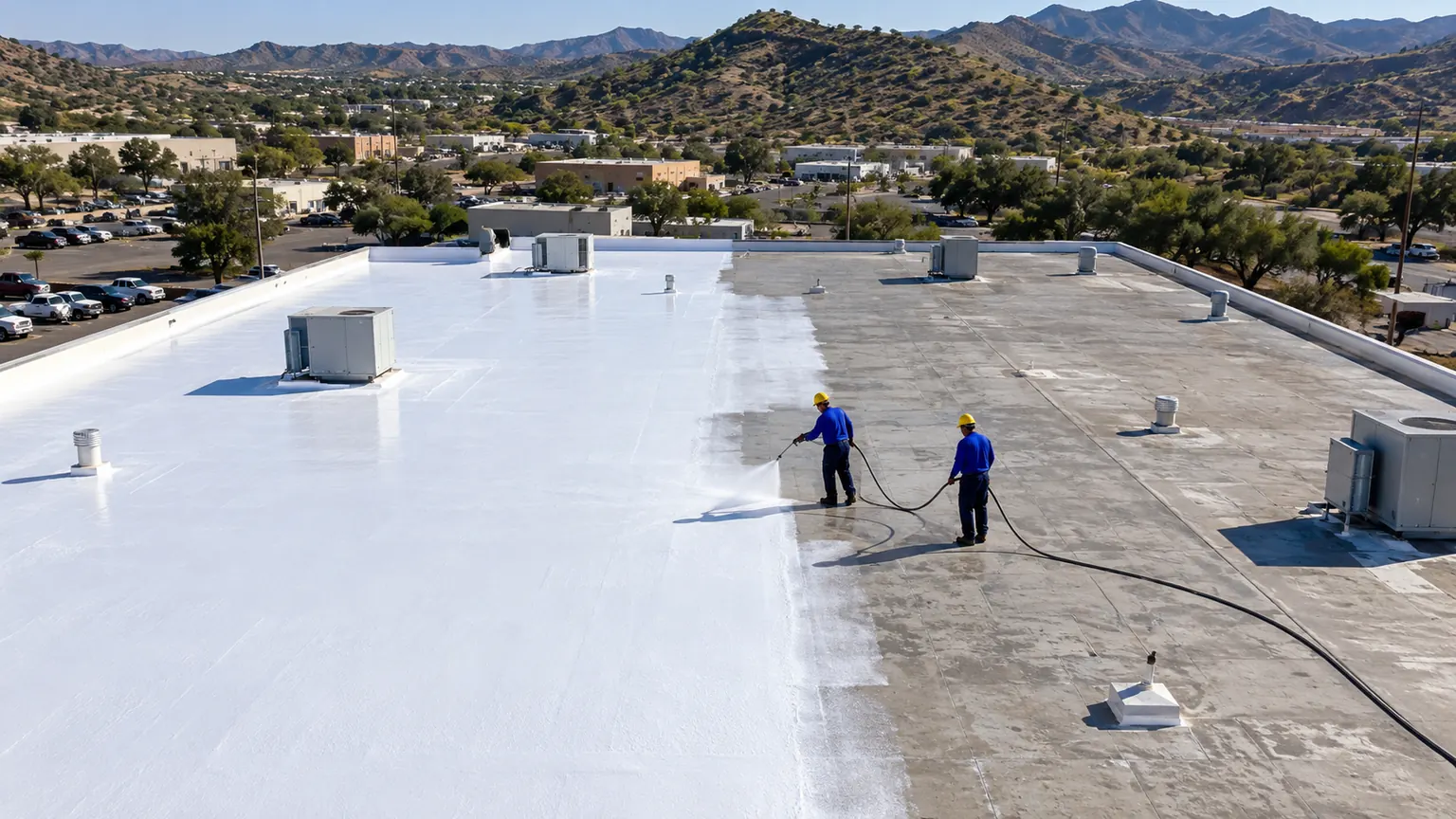 Bright White Silicone
Silicone goes on the low-slope Tubac roofs that hold water behind their parapets after storms.
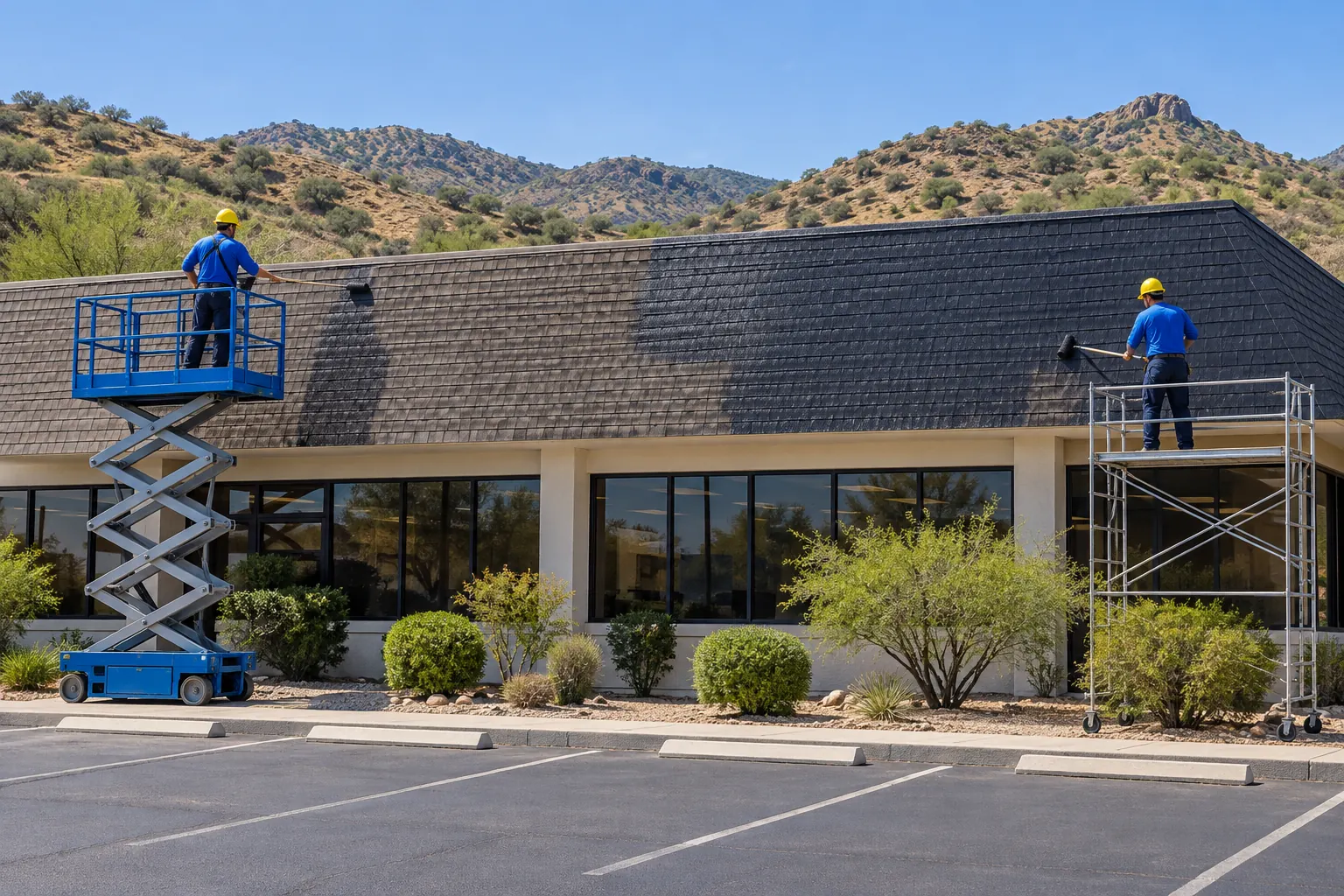 Coated Shingle, Light Gray
Shingled slopes and mansards on Tubac shops are coated only when both makers approve and color is cleared.
Tell us the shop hours and which doors customers use, and we will plan the roof work around them.
The work order is built around the business below, with every step announced ahead of time.
We look at the parapets, scuppers, coolers, and vent pipes, and note where the entrances, intakes, and display rooms sit under the roof. Those notes shape the work order.

Buildings inside the Tubac Historic Zone check coating color with the county advisory board. Outside the zone, the color choice comes down to reflectivity and owner preference.
Owners and tenants get the work days for each roof section, including the early morning pressure wash and the days intakes will be covered. Nobody is surprised by a crew overhead.
Parapet caps, scupper boxes, cooler curbs, and vent boots are repaired and wrapped with fabric before any field coating starts. Loose patches come off at the same time, so the coating sits on firm membrane.
Each section is coated and left to cure before the next one starts. Areas over front doors are rolled by hand to keep overspray off sidewalks.
Tubac sits in the middle of the corridor between Nogales and Amado.
A few miles south, with farm and small commercial metal roofs.
Farther north, where roadside roofs take the brunt of summer storms.
Wide distribution roofs closer to Nogales.
Cold storage and warehouse roofs at the border.
It does if your shop sits inside the zone. There, the Tubac Historic Zone Advisory Board run by the county reviews design plans for changes to existing buildings.
A bright white coating on a visible metal or shingle slope changes how a building reads from the street, so ask the county before picking a color. Flat roofs behind a parapet draw less attention.
Yes. The crew works on the roof, and the noisiest step, pressure washing, is scheduled before opening hours when possible. Coating near front doors is rolled by hand so nothing drifts onto the sidewalk.
Water-based acrylic has a mild odor. With solvent-based products, rooftop intakes and coolers are covered or switched off while that section cures. The product choice for an occupied space is settled at the inspection.
Tubac is unincorporated, so the Santa Cruz County Building Department handles permits, with historic zone review added for buildings inside the zone. A recoat differs from work that replaces insulation, so check with the county first.
Pails and equipment go up by ladder hoist or lift at the side or back of the building, away from customer entrances. The staging area is set up in the morning and cleared at the end of the job.
They often do. Overflow and drip lines keep the roof around the cooler wet, and service visits wear the surface. The drip is routed to a drain and the curb is reinforced before coating.
Yes. Multi-tenant buildings are coated in sections, and each tenant hears which days affect their space. The owner coordinates access, and the crew follows the agreed order.
The roof surface matters more than the walls. If the roof membrane is dry and attached, it can be coated, with extra attention where it meets the parapet. Wet roof decks on older buildings get repaired first.
Request an inspection and tell us your hours, or call to talk through the roof and the people working under it.
Leave a name and number and we will call to talk through the roof.
Or call now: +1 (623) 310-0223