

Silicone Roof Coating
Silicone is the switch when a roof holds water after storms, because it holds up where acrylic would soften.
- Goes Over
- Built-up, modified bitumen, single-ply, and foam
- Recoat With
- Silicone only, after cleaning
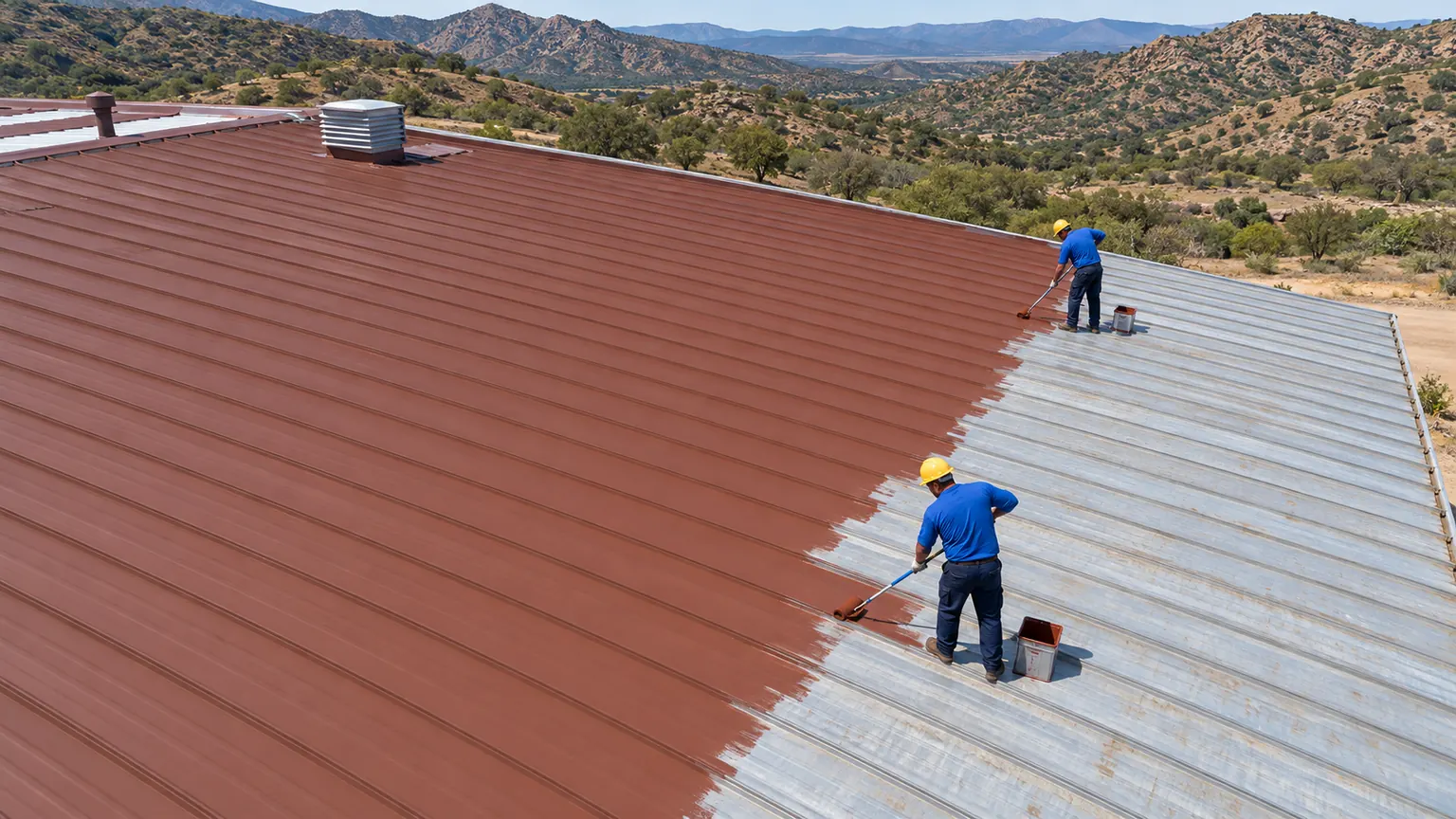
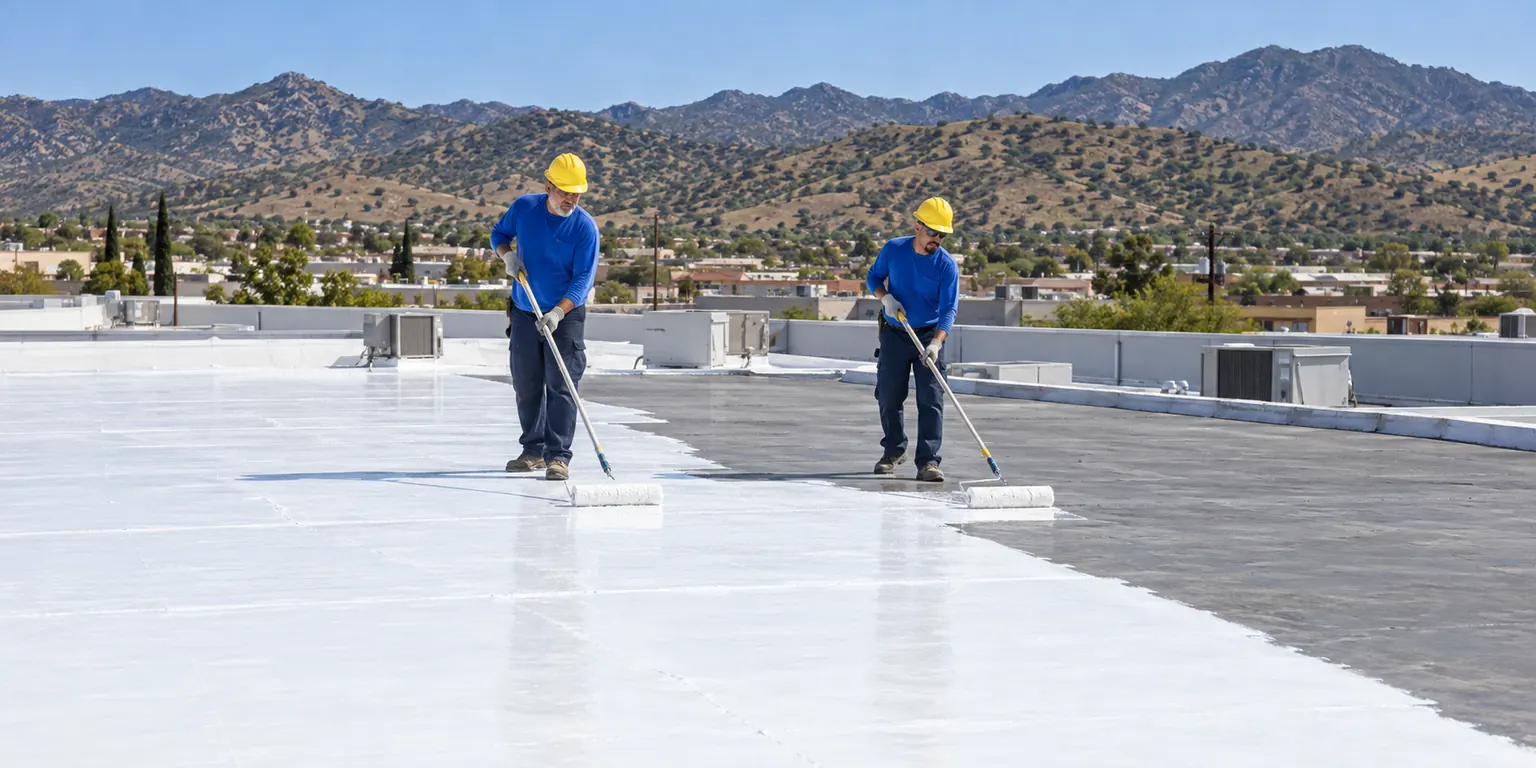
Acrylic roof coating in Nogales for roofs that drain well and gather dust. Work is timed for the warm, dry hours this water-based coating needs to cure.

Acrylic is a water-based coating, so drainage and weather decide where it works. These lists sort the roofs it suits from the ones it should skip.
Acrylic stretches over a roof that already drains. The work concentrates on the spots water touches longest and the joints that move.
Acrylic depends on water leaving fast, so every drain and strainer is cleaned and the bowl flashing checked. A drain that sits high gets corrected before coating.
Polyester fabric is embedded in a wet base coat over every seam. That reinforcement keeps daily expansion from cracking the coating at the joints.
Corners of curbs and pipe penetrations get fabric and a thicker base coat, because these are the spots where thin acrylic splits first.
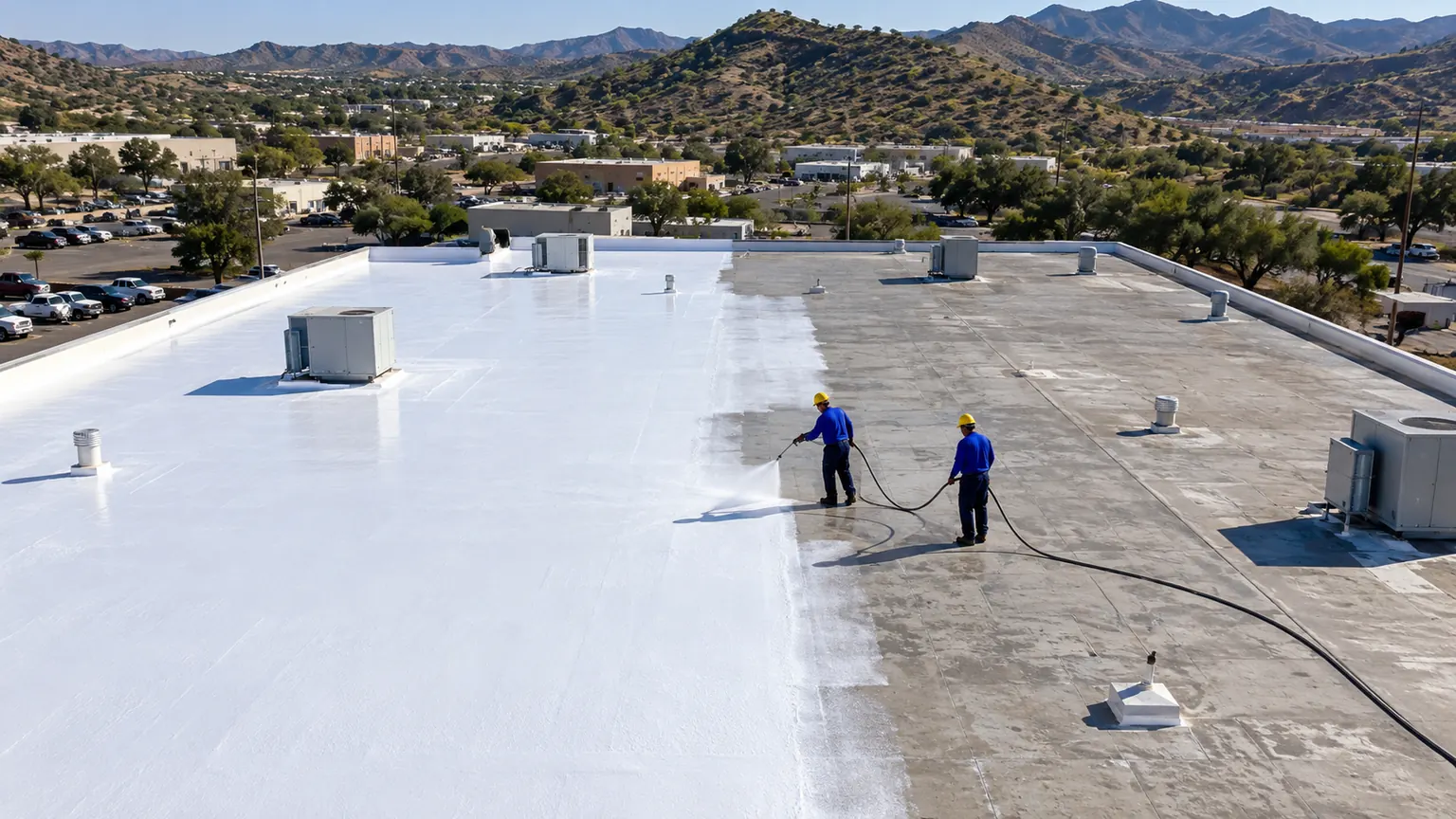
Fine dust settles on every Nogales roof. A full power wash and dry-down comes first, since acrylic will not grip a dusty or chalky surface.
Edge metal and scuppers move with temperature and pull at the coating. Joints are sealed and fabric bridges the transition from metal to roof.
Acrylic comes in a few build-ups. The surface and its drainage decide which one goes on.
| Build-Up | Goes Over | When It Fits |
|---|---|---|
| Acrylic base and top coat with fabric at seams | Drained built-up, single-ply, or coated roofs | Roofs with firm surfaces and good drainage |
| Bleed-blocking primer plus acrylic | Aged asphalt and modified bitumen | Dark asphalt roofs where oils would stain the white |
| Rust primer plus acrylic | Metal panel roofs | Sloped steel roofs on warehouses and shops |
| Acrylic topcoat over spray foam | New or recoated foam roofs | Foam roofs with clean slope to drains |
Over a dry, well-drained roof, an acrylic coating can provide these benefits.
Acrylic sheds dust better than silicone, so it tends to stay whiter on roofs near unpaved lots and truck traffic.
A white acrylic finish reflects much of the summer sun that would otherwise bake the membrane and the deck under it.
An aged acrylic roof can be cleaned, primed, and recoated with acrylic or silicone, which keeps future options open.
Water-based acrylic has a mild odor, which suits occupied offices and stores with rooftop air intakes close by.

A roof that turns gray from dust within a season usually suits acrylic. Give us the size and type of roof to see a ballpark range.
Acrylic work follows the weather. Each coat needs dry hours ahead of it.
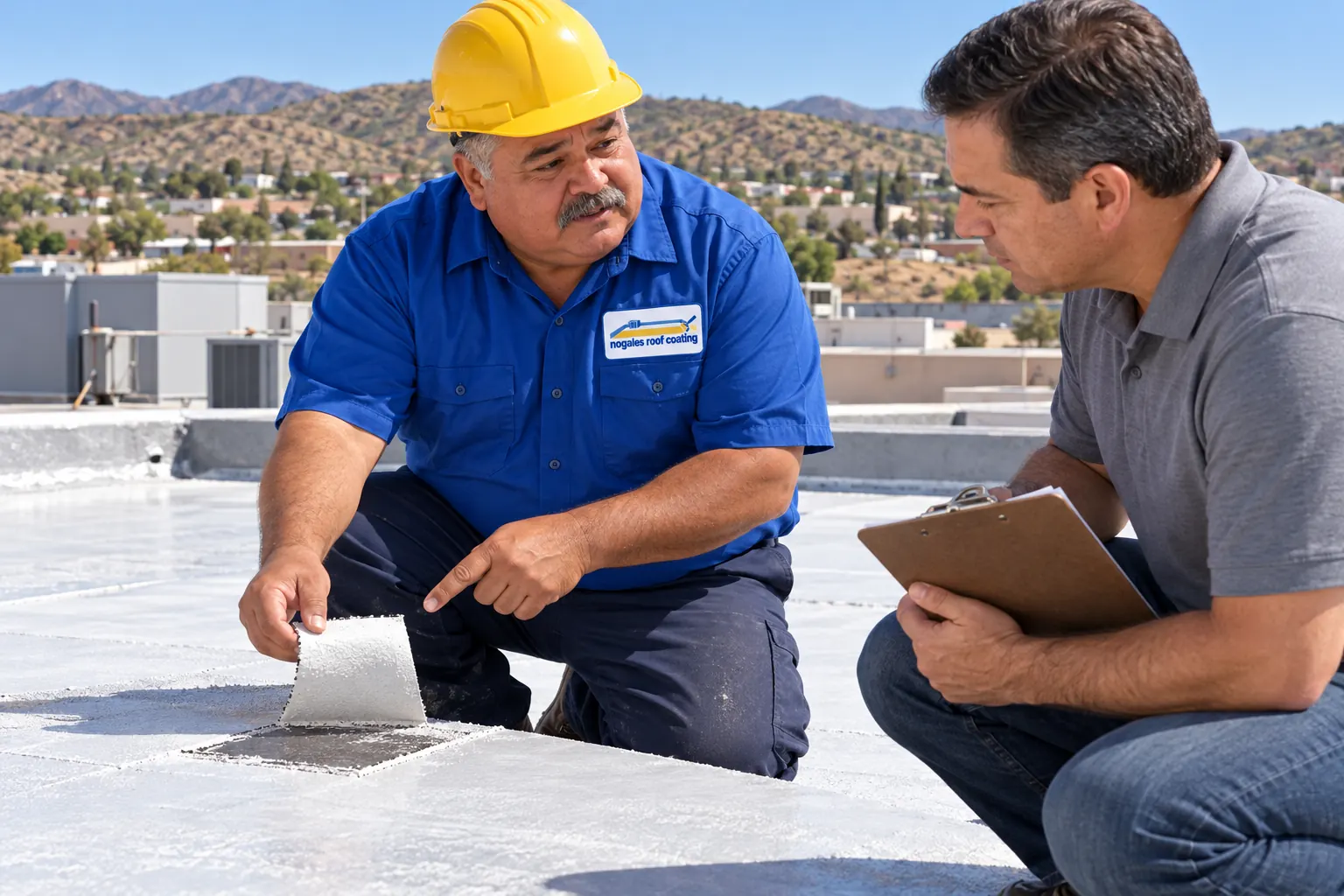
Drainage is the first thing checked on an acrylic job. We note low spots, high drains, and wet areas, and confirm the surface is not already silicone.

Work is set for warm, dry stretches, usually late spring or early fall. Coats start after morning dew burns off and stop with daylight left to set.
Dust, chalk, and loose granules come off with a power wash. Asphalt surfaces get a primer that blocks oils from bleeding into the white coat.

Seams, curbs, pipe penetrations, and roof edges get polyester fabric pressed into a wet base coat. On an acrylic roof, this step carries more of the job than any other.
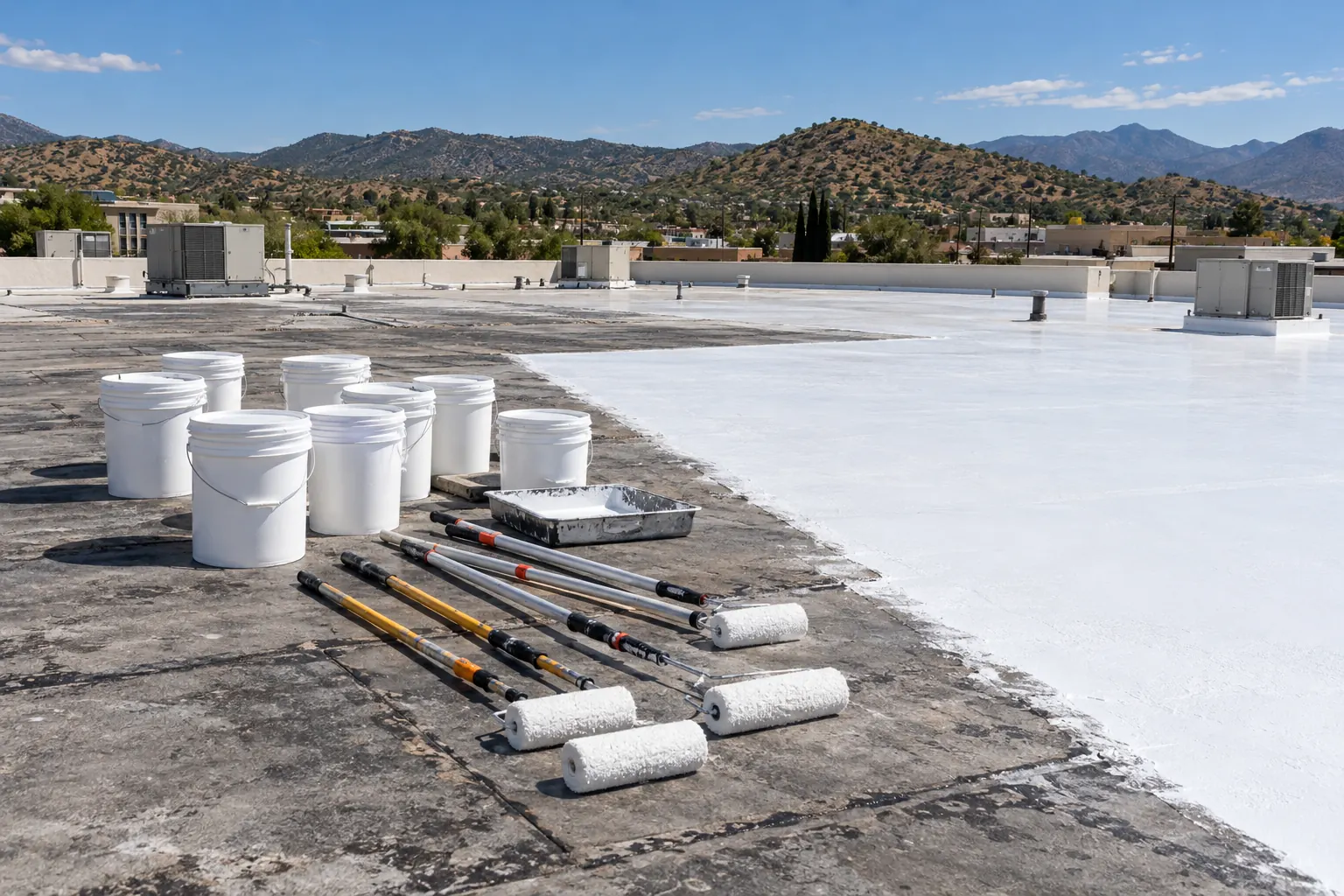
Base and top coats go on in separate passes, often on separate days, and each one is allowed to cure. Wet-film gauge readings confirm the roof meets the spec thickness.
Two systems often come up alongside acrylic.
Silicone is the switch when a roof holds water after storms, because it holds up where acrylic would soften.
Red-Brown Primer, White TopcoatMetal roofs get rust treatment and fastener work first, then an acrylic topcoat in most cases around Nogales.
Service life tracks the product, the thickness applied, and how well the roof drains. A thick acrylic film on a roof that sheds water outlasts a thin one over low spots.
When the top layer wears, the roof is cleaned, damaged spots are repaired, and a fresh coat goes on before the base shows, which avoids tear-off.
Acrylic cures as its water evaporates. Rain, heavy dew, or cold before it sets can wash it off or leave it soft. Summer monsoon storms and the cold nights of winter shrink the working window, so spring and fall carry most acrylic jobs.
No. Acrylic does not stick to silicone. A roof that already carries silicone is recoated with silicone, which is why the first inspection confirms what coating is on the roof.
Yes, on nearly every acrylic job. Seams and curbs move each day as the roof heats and cools. Fabric embedded in the base coat lets the coating flex there without splitting.
Oils in aged asphalt can bleed up and tint a white coat brown. A bleed-blocking primer goes on first to stop it. The adhesion test patch shows whether that primer is needed.
Usually a base coat and a top coat, sometimes in contrasting colors so missed spots are easy to see. The total thickness follows the product spec and is checked with a wet-film gauge.
It can on clear mornings, but afternoon storms from mid-June to the end of September leave little margin. Most owners prefer to schedule acrylic outside that stretch.
Enter the roof area and type for a ballpark acrylic coating figure, or call us to talk through drainage and timing.
Leave a name and number and we will call to talk through the roof.
Or call now: +1 (623) 310-0223