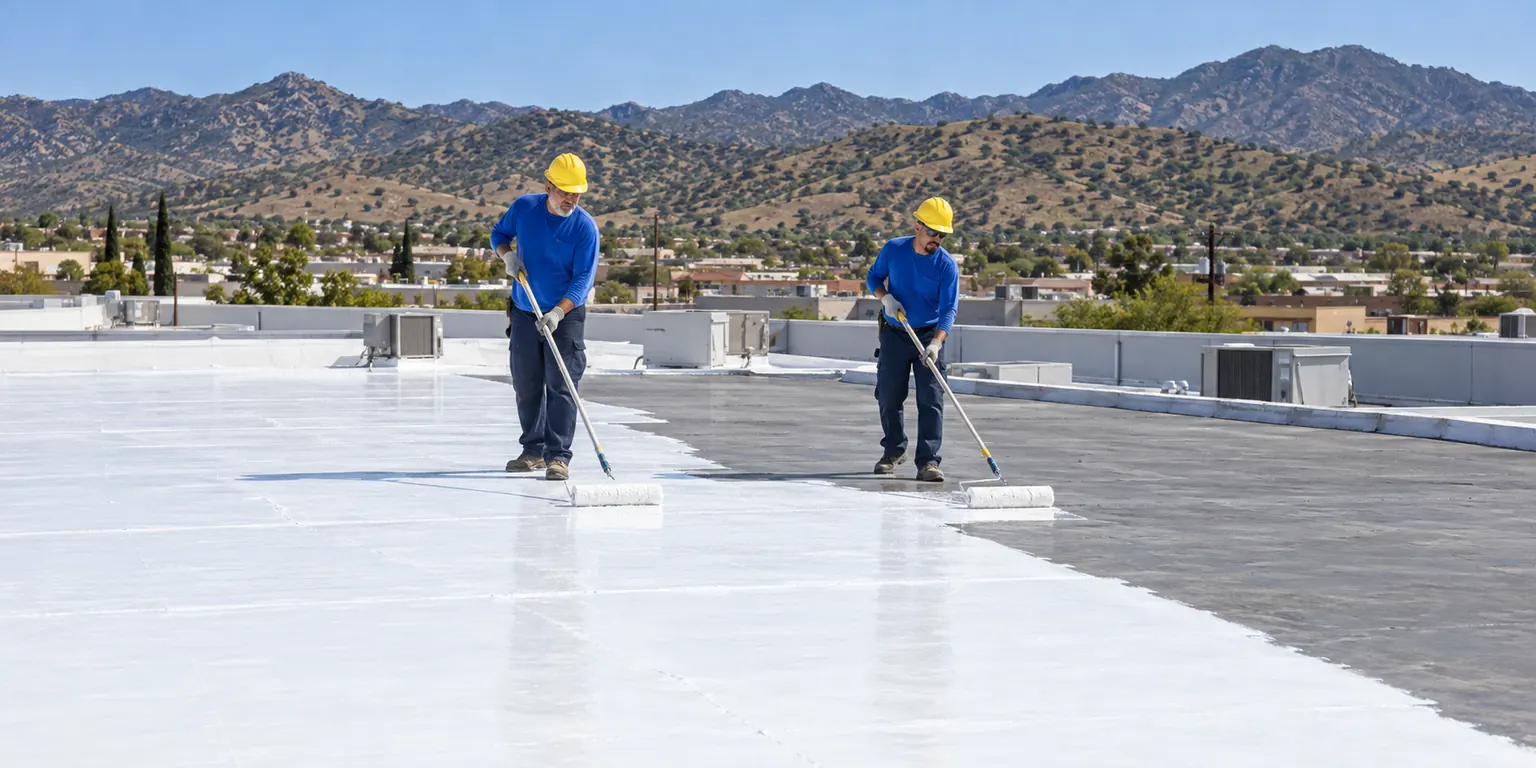
 Matte White Acrylic
Acrylic Roof Coating
Acrylic suits small Patagonia roofs that drain well, as long as it gets the warm, dry hours it needs to cure.
- Goes Over
- Metal, foam, and drained low-slope roofs
- Recoat With
- Acrylic or silicone after priming

Patagonia commercial roof coating for storefront roofs, timed for the dry spells when coatings cure right and storms stay away.
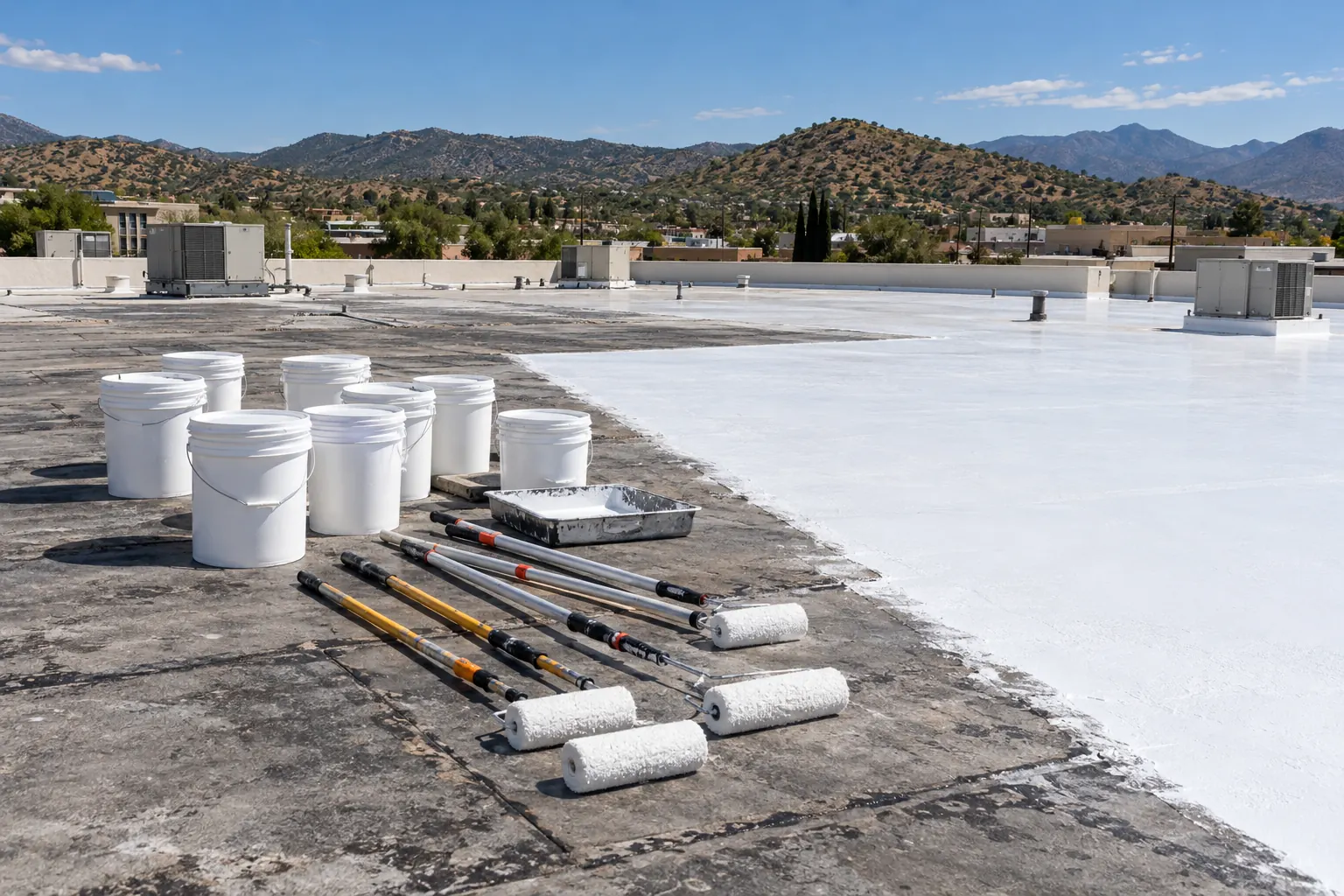
Patagonia's storefronts sit near Sonoita Creek, northeast of Nogales on SR 82, mostly under small low-slope roofs.

On a small roof the coating goes on fast. What decides the result is the weather around it: dew in the morning, cold at night, and storms in the summer afternoons.
We plan Patagonia jobs for late spring and early fall, start after the dew burns off, and stop with daylight left for the film to set.
Small storefront roofs leak at a handful of spots. The numbers match the list.
Tall front walls on main-street buildings hide the roof and catch wind. Their cap flashing and the joint where the roof meets the wall are checked for gaps.
Water usually leaves these roofs through a scupper at the back. Leaves and dust collect there, and a clog sends water back under the roof edge.
Slight sags on older roofs hold a little water after summer storms. Those spots need a fully dry day before coating can start. Those spots also get an extra coating pass.
Years of small repairs leave patch edges that lift in the sun. Loose patches come off so the coating sits on a firm base. Firm patches stay and are coated over.
Heater flues and plumbing vents crowd small roofs. Each one gets a new boot or flashing collar before it is wrapped in coating. Hot flues get a collar rated for heat.
Coating a dry storefront roof in the right weather can bring these results.
Coating laid down on a dry morning with dry hours ahead reaches its full strength, the base for every other gain.
Work on a small roof finishes in a short stretch of good days, and customers come and go below the whole time.
A light roof surface reflects much of the sun that heats storerooms and offices under these small roofs.
A roof that is dry and attached keeps its membrane, avoiding a full reroof on a tight main-street lot.
Three systems cover most Patagonia storefront roofs.
Matte White AcrylicAcrylic suits small Patagonia roofs that drain well, as long as it gets the warm, dry hours it needs to cure.
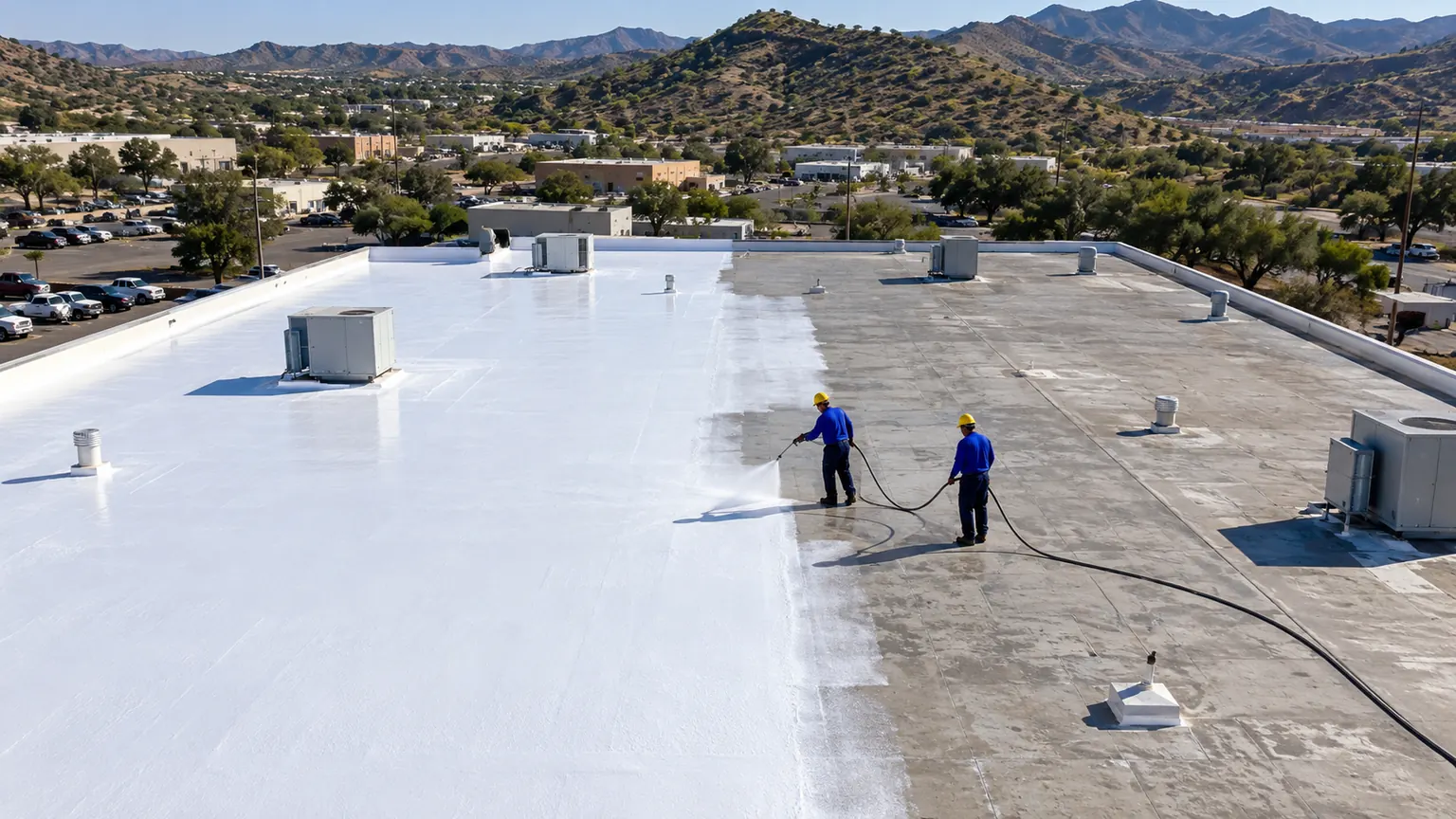 Bright White Silicone
Silicone cures with moisture in the air and handles the shallow ponds on older storefront roofs.
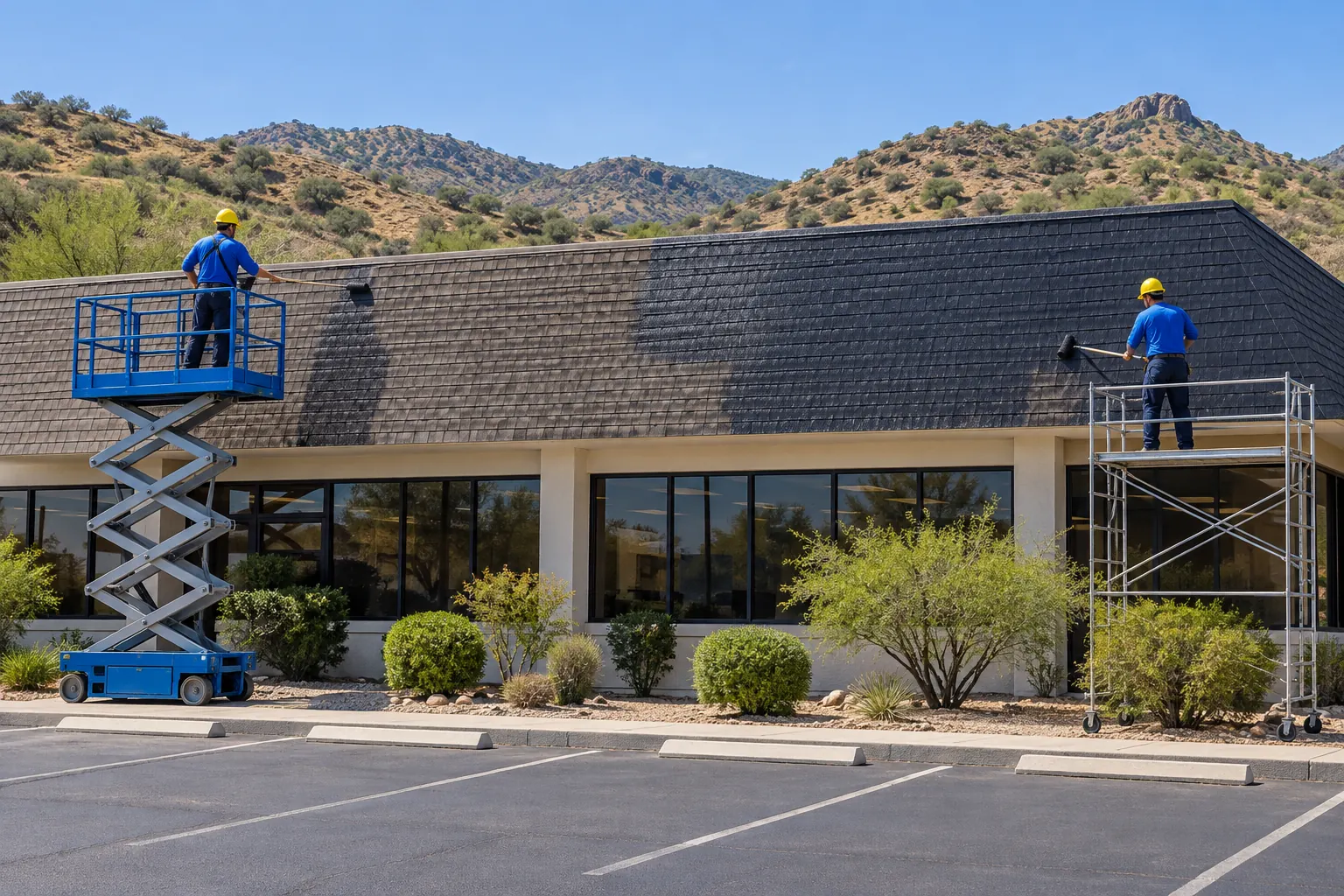 Coated Shingle, Light Gray
Shingled porch roofs and mansards on Patagonia storefronts are coated only with approvals from both makers.

Call us before the season you want the work done, and we can plan the dates around the forecast and your shop.
Weather sets the dates. Everything else follows the same careful order.
We check the parapet, the rear scupper, old patches, and every flue and vent, and take moisture readings across the roof before choosing a coating.

Work in town goes through the Town of Patagonia, with county plan review under the town's procedures. We confirm what the roof scope needs before work is booked.
Roof work dates are picked for dry weather with mild nights, usually late spring or early fall. Each work day is confirmed against the forecast the day before.
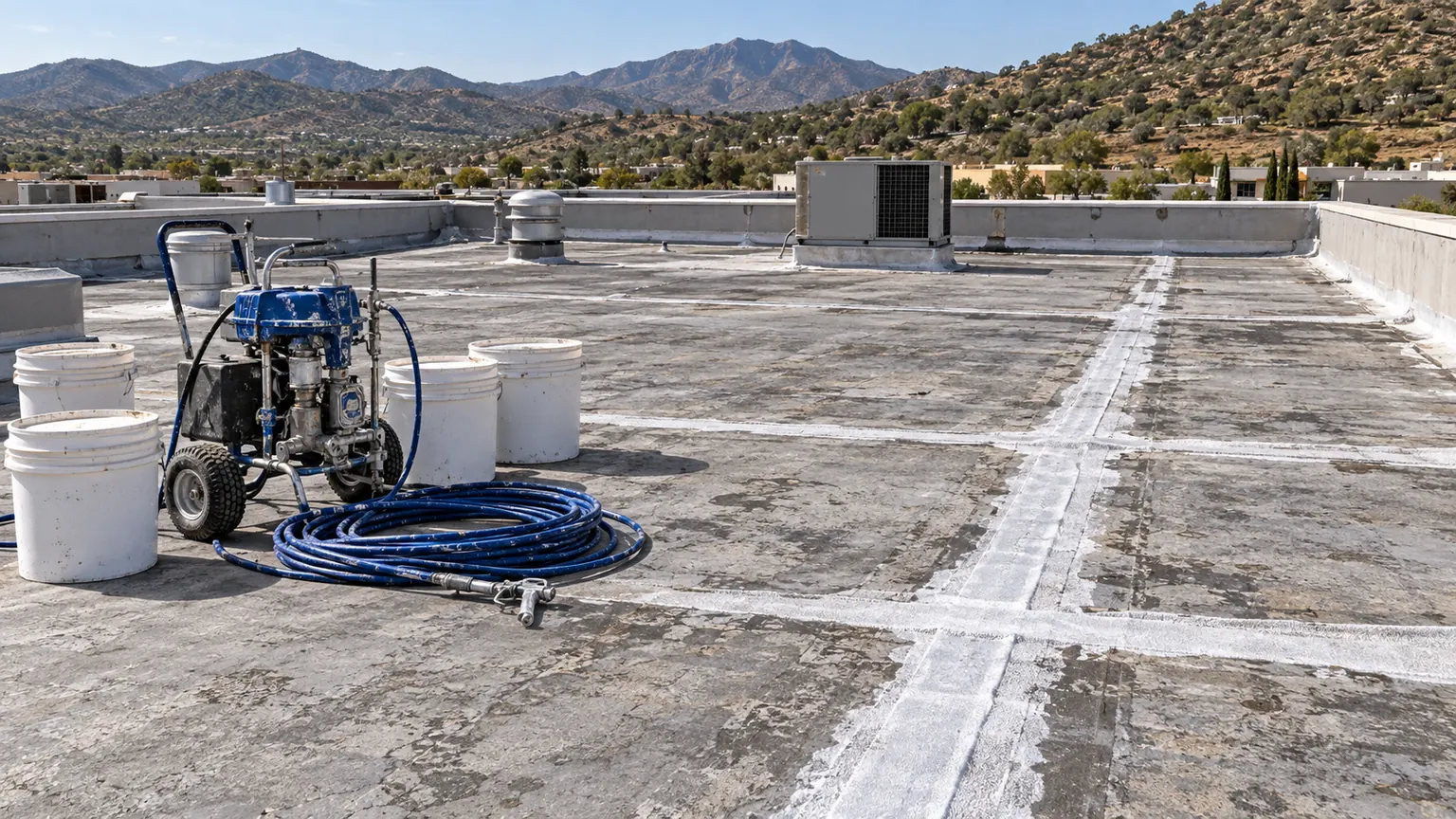
The roof is washed and allowed to dry fully. Loose patches come off, and the scupper, parapet joint, and vent collars are rebuilt and reinforced.
Coats go on after the dew lifts and stop with time left for the film to set before evening. Each coat cures fully before the next goes on.
Patagonia connects to Nogales and the I-19 towns by SR 82.
Late spring and early fall usually give the best coating windows. Coatings need dry hours to cure, and two patterns shape the plan: monsoon storms, which the National Weather Service dates from June 15 through September 30, and cold nights that leave dew.
On a Patagonia storefront, that means starting once the roof surface is dry to the touch and wrapping up early enough for each coat to set before sundown.
Patagonia is an incorporated town. Permits go through the Town of Patagonia, with plan review by the county building department under the town's procedures. The scope of the job decides what is needed.
Work stops before the rain reaches the roof, and fresh coating is protected or left to cure if it has time. Any coating washed off before it set is removed and reapplied once the roof dries.
Small roofs often need two or three work days: prep, then base coat, then top coat, each with cure time. The days do not have to run back to back if the weather breaks.
Water-based coatings cure by drying out, so dew and cold slow them down or leave them soft. Starting on a damp surface also weakens the bond, which is why the roof is checked dry first.
They catch wind and shade part of the roof, so the joint where the roof turns up the wall stays damp longer and moves more. That joint gets fabric reinforcement and extra coating.
On mild, dry stretches, yes, with short work days that end well before the evening chill. Most owners still choose late spring or early fall for the widest margin.
Firm patches stay and get coated over. Patches with lifted edges are removed and the area beneath is repaired, so the coating does not rest on a loose layer.
Request an inspection to set the scope and dates, or call to talk about timing for your Patagonia storefront.
Leave a name and number and we will call to talk through the roof.
Or call now: +1 (623) 310-0223