

Spray Foam Roofing

Nogales Spray Foam Roofing

Spray foam roofing in Nogales: new polyurethane foam over a dry roof, slope built toward drains, and recoats that keep sunlight off the foam.

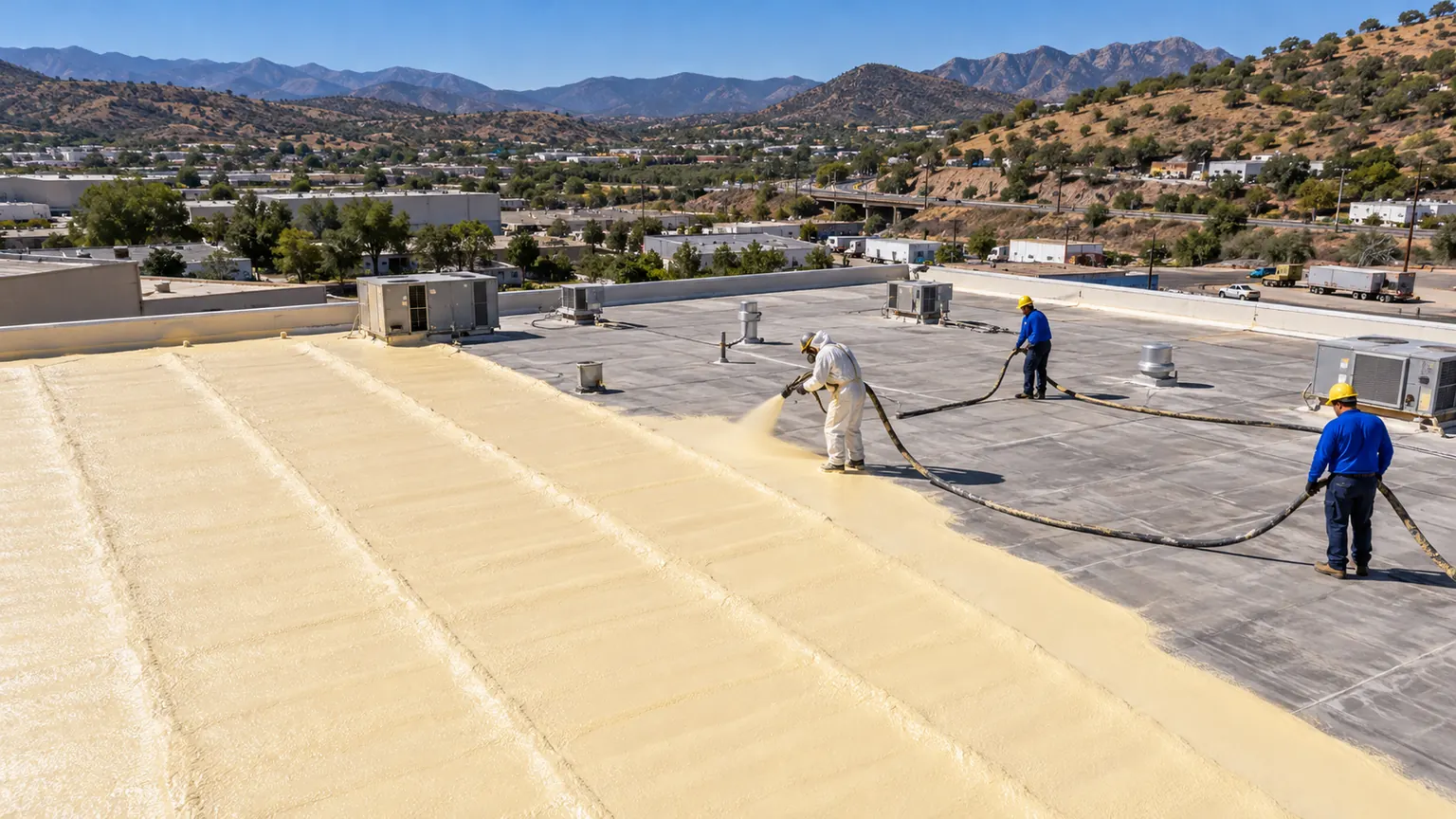
Roofer in a protective coverall spraying polyurethane foam on a flat roof while a coworker tends the hose
  • Foam sprayed over dry decks
  • Slope built toward drains
  • Topcoat blocks sun damage
  • Hail dents sealed promptly

Is Spray Foam A Fit Here?

Foam bonds to the surface it is sprayed on, so the roof underneath has to be dry and clean. These are the usual signs either way.

Foam Fits

  • Built-up or metal roofs with dry insulation underneath
  • Roofs with shallow ponding that slope could fix
  • Buildings that would gain from extra roof insulation
  • Older foam roofs with firm foam under a worn topcoat
  • Roofs crowded with curbs and pipes that are hard to flash

Fix Or Rethink First

  • Wet insulation or a wet deck below the surface
  • Loose gravel that cannot be fully removed
  • Parked cars or open intakes close downwind with no plan to cover them
  • Foam soaked through at blisters across large areas
  • Edges and parapets too low for added foam thickness

Spray Foam Roofing Checkpoints In Nogales

Foam roofs show trouble in a few predictable places. Each spot below gets checked on a recoat and planned for on a new foam roof.

12345
  1. Around Rooftop Units

    Foam is sprayed up the sides of curbs, so the joint never relies on sealant alone. On older roofs, bare foam at curb corners is the first sign a recoat is due.

  2. Walk Paths

    Granules wear off where service techs walk to the units. Worn paths get fresh coating and granules, or walk pads, so the foam below stays covered.

  3. Drains

    Each drain sits at the bottom of foam tapered toward it so water leaves the roof. Low spots around a drain show where more slope is needed on the next pass.

  4. Blisters And Dents

    Hail dents, bird pecks, and blisters open the topcoat. Damaged foam is cut out, filled, and coated so water never reaches the cells below.

  5. Sun-Facing Ridges

    High points take the most sun and lose topcoat first. Yellow or brown foam showing there means ultraviolet light has reached it.

Commercial Roof Coating Options for Nogales

Spray foam work comes in a few forms, from a full new roof to a topcoat renewal.

OptionGoes OverWhen It Fits
New foam plus silicone topcoatDry built-up, metal, or concrete decksRoofs needing insulation and slope, with low spots to fill
New foam plus acrylic topcoatThe same decks, on roofs that drain wellFoam roofs where dust is the main concern
Recoat onlyExisting foam with firm cells and a worn topcoatFoam roofs caught before bare foam spreads
Foam repair plus recoatFoam with hail dents, blisters, or wet spotsOlder foam roofs with local damage

Benefits of Coating Your Roof

For a foam roof over a dry deck, these are the gains owners usually see.

  • Adds Insulation

    Each inch of polyurethane foam adds insulation to the roof, which helps buildings that run cooling for long Nogales summers.

  • Builds Slope

    Low areas can take thicker foam, giving ponding water a path toward the drains.

  • No Seams

    Sprayed in one piece, it wraps curbs and pipes, removing the seams where most flat roofs leak.

  • Recoats Over Time

    A worn topcoat is renewed over firm foam, which keeps the foam roof in service instead of tearing it off.

Drone view of a flat roof being foamed in lanes beside the old roof surface

Brown Or Powdery Foam Showing?

Bare foam breaks down in the sun every week it stays exposed. Send us the roof size and type for a ballpark on recoating or new foam.

How A Foam Roof Goes On

New foam and recoats share these steps. A recoat skips the spraying of new foam.

  1. Inspect Your Roof

    Core cuts show foam thickness and whether the cells are dry. On older roofs we map bare foam, hail damage, and blisters before planning the work.

    Roofer showing a building owner the layers in a core sample cut from a flat roof
  2. Remove Wet Material

    Wet insulation, soaked foam, and loose gravel are removed and replaced where needed, so new foam bonds to a dry, clean surface across the whole roof deck.

  3. Spray Foam In Lifts

    Foam is sprayed in passes, thicker at low spots to build slope toward drains. Wind is watched closely, and nearby cars and air intakes are covered.

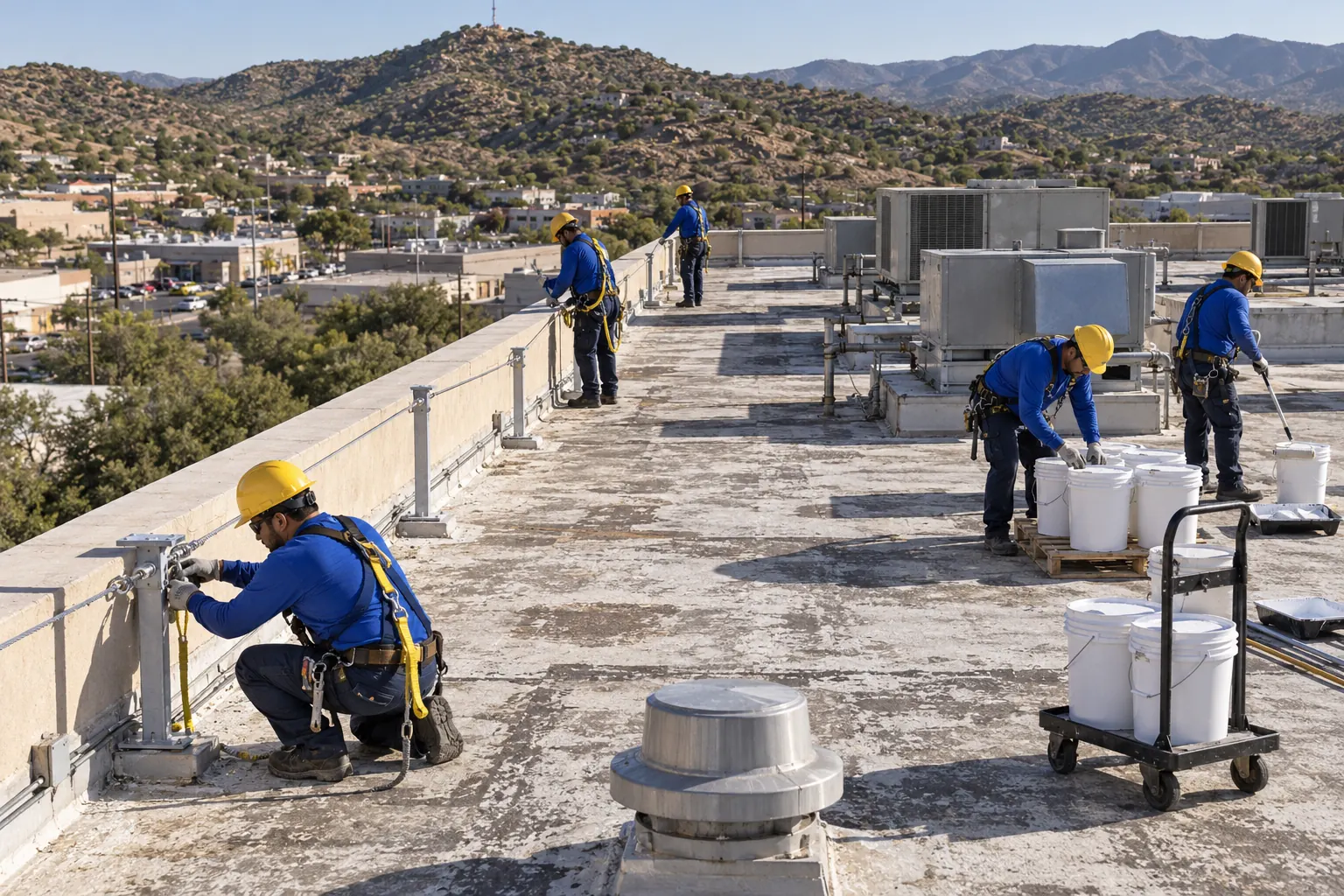
    Crew setting a fall-protection line and staging coating pails on a flat roof
  4. Seal The Surface Fast

    Bare foam starts to break down within days in strong sun, so the base coat follows quickly after the foam is sprayed and its thickness is checked.

  5. Topcoat And Granules

    The topcoat is applied to the spec thickness over the whole foam surface, with granules broadcast into the final coat along walk paths for grip and wear resistance.

Topcoats For Foam Roofs

Every foam roof needs one of these two coatings over it.

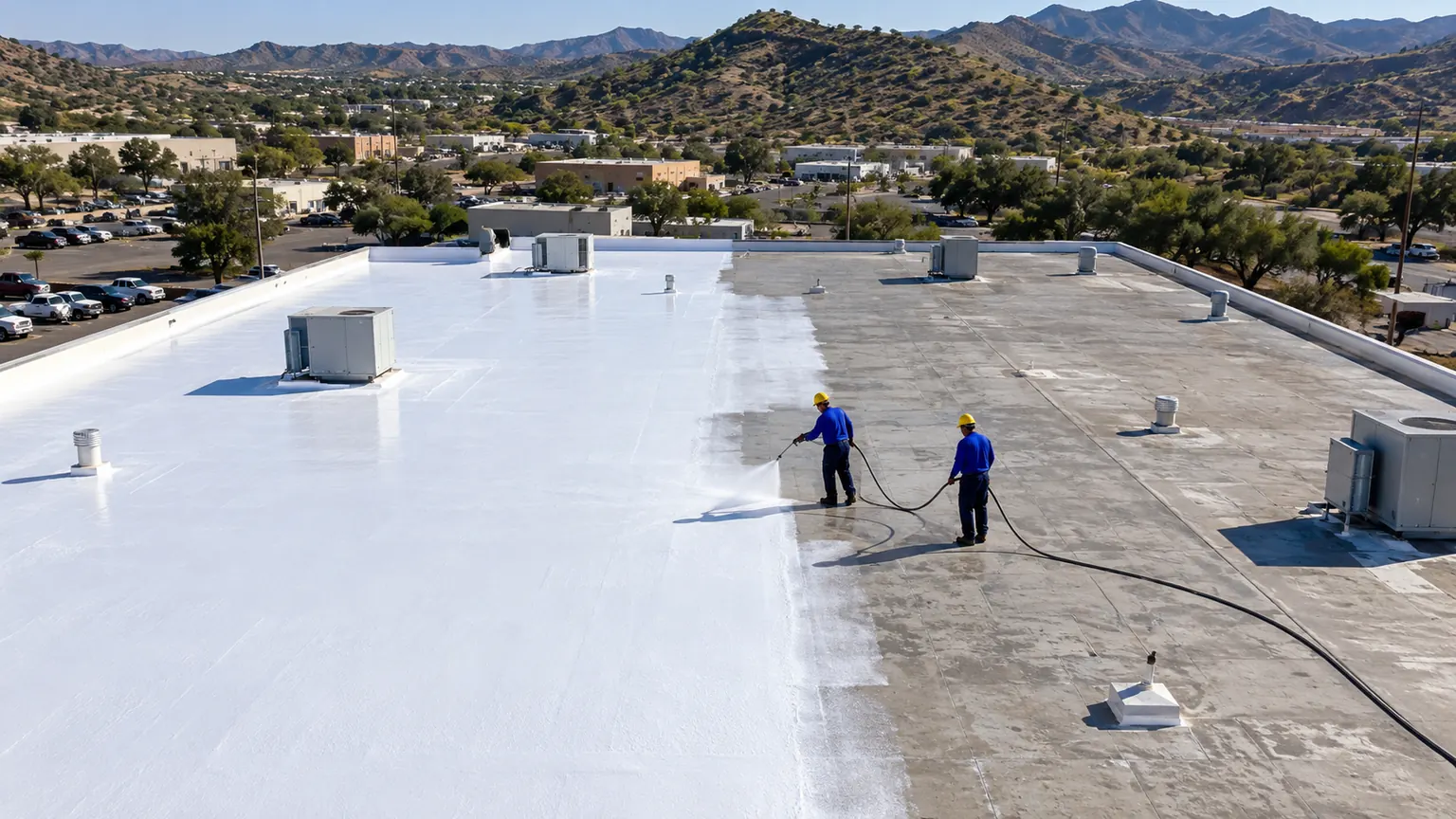
Drone view of a crew spraying a lane of white silicone across a large flat roofBright White Silicone

Silicone Roof Coating

Silicone is a common topcoat on foam because it handles the shallow ponding that some foam roofs still carry.

Goes Over
Built-up, modified bitumen, single-ply, and foam
Recoat With
Silicone only, after cleaning
Silicone roof coating in Nogales
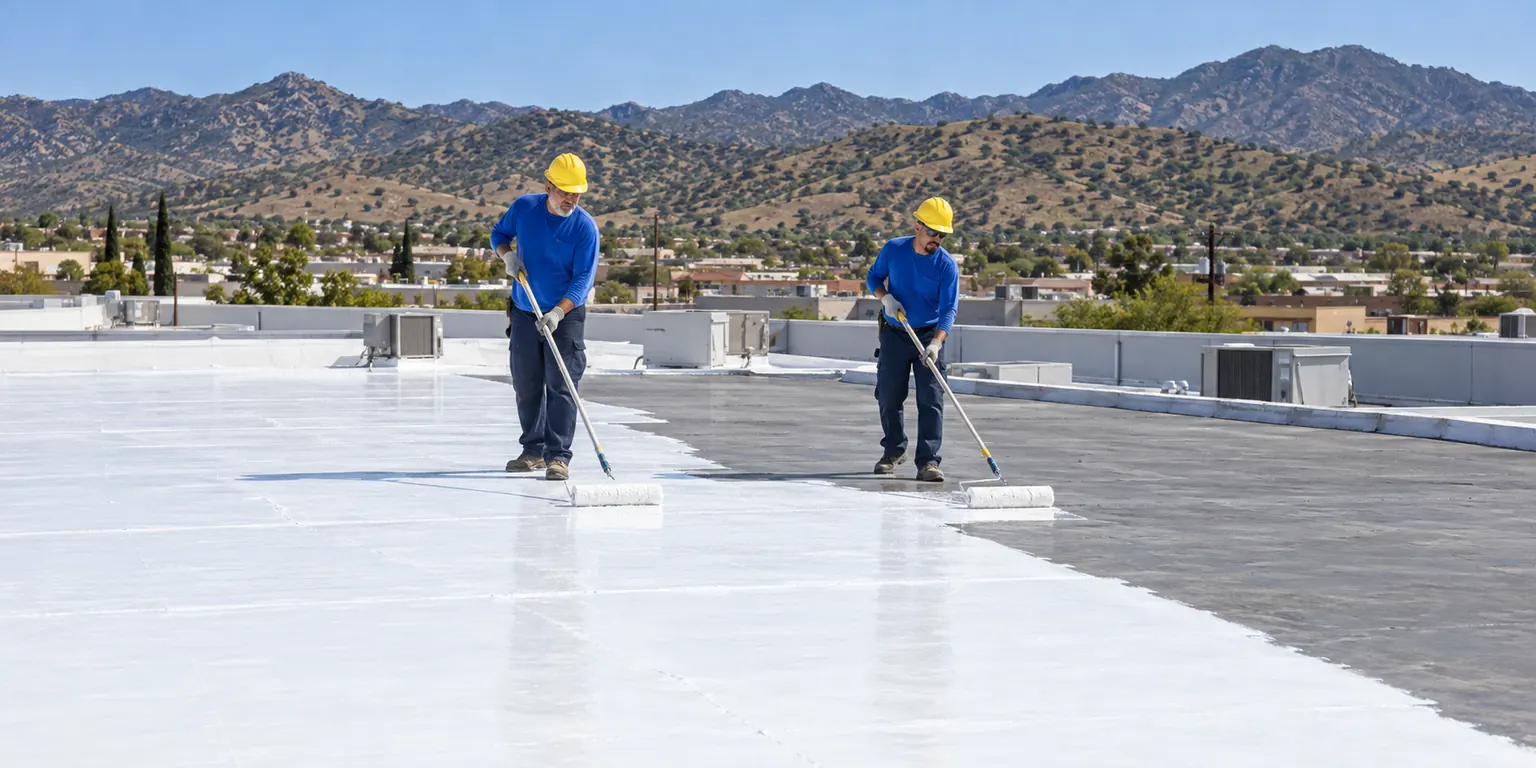
Two roofers rolling white acrylic coating over a low-slope commercial roofMatte White Acrylic

Acrylic Roof Coating

Acrylic topcoats suit foam roofs with clean slope to their drains and a lot of blowing dust nearby.

Goes Over
Metal, foam, and drained low-slope roofs
Recoat With
Acrylic or silicone after priming
Acrylic roof coating in Nogales

Spray Foam Roofing Questions

Why does a foam roof need a coating, and when to recoat it?

Sunlight breaks down bare polyurethane foam. Under the strong high-desert sun around Nogales, exposed foam turns yellow, then brown and powdery, and loses thickness.

Plan a recoat when bare foam shows at ridges, drains, or curbs, when granules wear off walk paths, or when blisters, hail dents, or bird pecks open the surface.

How thick is a foam roof?

Thickness is set by the insulation the building needs and the slope the roof needs, so it varies across the roof. Low areas get more foam to move water toward drains. Core cuts measure it on existing roofs.

Can foam go over a metal roof?

Yes. Foam sprayed over metal panels covers the fasteners and laps in one layer and adds insulation. The panels are cleaned and primed first, and loose or rusted-through panels are fixed.

What happens to overspray?

Foam can drift on wind. Work stops when wind picks up, and cars, windows, and rooftop units near the spray area are covered. Parking near the building may be moved for a day.

Do birds damage foam roofs?

Birds sometimes peck at foam, especially where the topcoat is thin. Peck holes and hail dents are filled and recoated during maintenance so water cannot soak into the foam.

Can you add foam over an old foam roof?

Often yes, when core cuts show the existing foam is dry and well bonded. Wet or delaminated areas are cut out first, then new foam and a topcoat go over the whole roof.

Is the building usable while foam is sprayed?

Yes, work happens on the roof surface. Air intakes near the spray area are shut down or covered while foam goes on, and the crew sets up away from doors people use.

Get A Foam Roof Ballpark

Enter the roof area and type for a ballpark figure on foam or a recoat, or call to describe what you see on the roof.

Call Us +1 (623) 310-0223